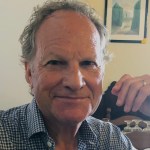

New evidence shows that faulty or possibly faked evidence played a major role in Jens Soering’s conviction for the 1985 slashing murders of Derek and Nancy Haysom.
The evidence was handled by Mary Jane Burton, a now-dead former forensic examiner with the Virginia Department of Forensic Science. Her work at the department from 1973 to 1988 has been discredited amid allegations of misconduct, discrepancies, errors and alterations of test results, in addition to misleading testimony in court, according to the Virginia State Crime Commission.
Burton performed blood tests on numerous samples taken from the Haysoms’ murder scene, the couple’s retirement home in the Blue Ridge foothills of Bedford County. Among those samples was a small amount of what Burton testified was Type O blood, Soering’s type.
However, modern analysis of the sample, using DNA tests, revealed that the blood was actually Type A, the same as that of Derek Haysom. If that were known at Soering’s trial, the prosecution would have been left with just one other forensic link to Soering, a bloody sock footprint supposedly similar to Soering’s foot, which experts now call “junk science.”
The other main evidence against Soering was a confession he gave during several days of questioning after his arrest in 1986. He later recanted the confession, saying he gave it only to protect his girlfriend, Elizabeth Haysom, the Haysoms’ daughter who was arrested at the same time and also faced possible murder charges.
When the murders occurred, Soering, 18 at the time, and Elizabeth, 20, were honor students at the University of Virginia.
Soering pleaded not guilty before his 1990 trial and contended that Elizabeth told him she killed her parents. She pleaded guilty in 1987 to being an accessory before the fact to murder and was sentenced to 90 years in prison. She testified that Soering was the killer. He was found guilty and received a sentence of two life terms. Both were paroled in 2019 after 33 years in prison and deported to their home countries: Elizabeth to Canada and Soering to Germany.
Soering has maintained his innocence ever since the trial. Now, he is arguing his case for both a pardon from the governor and a writ of actual innocence from the Virginia Court of Appeals.
Persuading the appeals court to consider the new evidence may not be possible because of fairly strict rules limiting what can be introduced after the evidence included in a petition for a writ of actual innocence. But that new evidence can be provided to state officials investigating Soering’s petition for a pardon from the governor. The governor’s office did not respond to questions asking when a decision could be expected.
Questions about Burton’s work at the state’s forensic science department first got public attention in February 2023, four years after Burton’s death, when the podcast “Admissible: Shreds of Evidence” first ran. The 12-episode show, hosted by reporter Tessa Kramer, raised serious questions about Burton’s serology work during her tenure at the state crime lab. The podcast cited evidence of misconduct and changing findings in lab documents.
As a result of that, the state legislature in 2024 launched a multi-agency review of criminal case files handled by Burton during her tenure as a state serologist. The review was charged with assessing “whether Burton engaged in a pattern of forensic errors, test alterations or misleading trial testimony.”
The Virginia Crime Commission reported earlier this year that it and the Virginia Department of Forensic Science have identified 7,581 criminal cases in which Burton was forensic examiner.
So far, the agencies have found:
- At least 186 cases in which Burton testified in court.
- 1,262 convicted individuals have been subject to her testing.
- The convicted individuals include 108 who were incarcerated at the time of the report, 54 on some form of Department of Corrections supervision, 408 who are dead, eight men executed and 11 who were exonerated.
The investigation is still working with state courts to “determine the conviction status of roughly 2,844 remaining named suspects,” according to the commission.
Soering’s conviction is among those being reviewed according to a March 24, 2025, letter from the Department of Forensic Science to Soering. Amy C. Jenkins, the department counsel for the forensic agency, told Cardinal News on Wednesday that she could not comment on the status of that review because his case currently is under litigation over his writ of actual innocence before the state appeals court.
In a telephone conversation Tuesday from Germany, Soering told Cardinal News he considered Burton’s identity of Type O blood at the crime scene as the key forensic evidence leading to his conviction. “That cost me decades of my life,” he said. The prosecutor at his trial emphasized the presence of Type O blood 26 times in closing arguments, Soering said.
But a new review of the blood sample concluded that Burton’s Type O analysis should actually have been Type A, due to a then-well-known phenomenon called “weak A,” in which reduced expression of A antigens can make A blood difficult to distinguish from O. Well-known tests existed in 1985 to correctly distinguish between the two. Weak A is more common in older people. Derek Haysom was in his early 70s.
Soering told Cardinal News he is inclined to think that Burton’s decision to change the blood type from an initial finding of Type A to Type O “was sloppiness. In addition to shading evidence, she was just … bad at her job. Sloppy. Weak A was not a secret back then; people knew about it. She didn’t bother to do any follow-up work to make certain.”
Soering’s Charlottesville attorney, Elliott Harding said, “Yes, I do believe he very well may be a victim of similar issues Burton was known for.”
For more on this story, see: