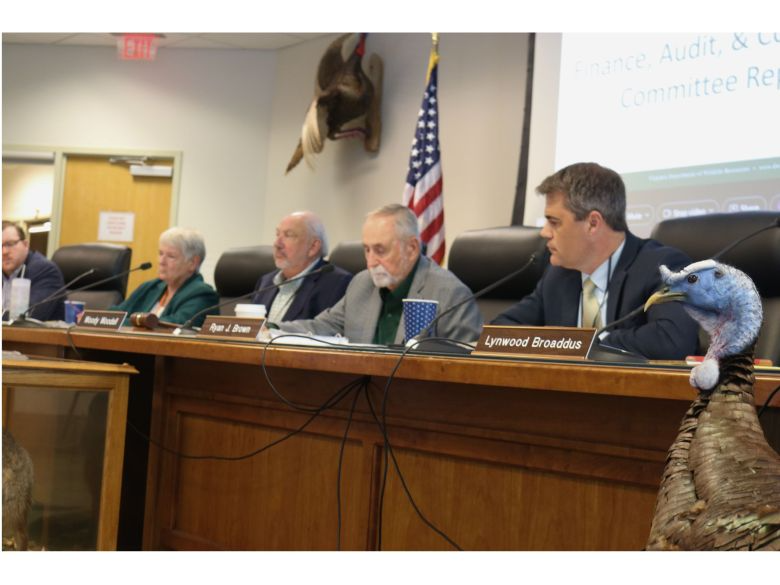
On Aug. 18, the Amherst County Board of Supervisors voted to end by-right approval of data centers. The same day, a developer filed an application. That is where Virginia is in the fall of 2026: every county south of the Occoquan has a proposal on the table, every board is writing rules at the speed of a public comment period, and the share of Virginians who would welcome a data center next door has fallen from 69 percent to 35 percent in three years.
The money is real. Loudoun County took in $1.2 billion in data-center property taxes this fiscal year, 39 percent of its budget, and cut its real-estate rate ten years running. That is why the applications keep coming to Amherst, Botetourt, Pittsylvania and Halifax, and why every board that says no eventually gets asked again.
What is also real is that Loudoun got the money and almost nothing else. Two hundred buildings, and not one of them warms a school, dries a crop or grows a tomato. Every one of them throws its heat into the sky through a cooling tower, at the owner’s expense, because nobody ever asked for anything different.
Virginia has now asked.
This spring the General Assembly passed HB 323, the first law in the United States directing a state to put data-center waste heat to use. It cleared the Senate 39 to 0. It orders Virginia Energy to find the opportunities, connect the data centers to the heat users, study what the Nordics and the Dutch already do, and hand the legislature a strategic plan. That report was due Sept. 1. The 2027 session is where it becomes law or becomes a shelf.
Here is what Southside and the Valley should ask for that Loudoun never did.
Every data center is a furnace. Nearly all the electricity that goes in comes out as heat, and the newest liquid-cooled halls put it out as warm water, exactly the temperature a greenhouse wants in a Virginia January. A two-and-a-half-acre greenhouse on that water can grow on the order of 695,000 pounds of fresh produce a year with no boiler and nothing burned. Write a covenant into the rezoning that at least 15 percent of it goes to the host community, and one building’s waste feeds about 400 of your neighbors, year-round, from the fence line. Add the fish house that runs on the same loop, the farm store, and the homes on radiant floors at the end of it, and the campus that was going to take the farmland has instead built the farm, and the jobs that come with it are agricultural, not just electrical.
None of this requires a subsidy. It requires a question. Loudoun never asked, “Where does the heat go?” because in 2010 nobody knew it was worth asking. Every county in the commonwealth knows now.
So three things, in order:
To Virginia Energy and the HB 323 work group:
Name a demonstration site. A plan that says waste heat is promising and should be studied further is the same plan every state has. A plan that says here is the county, here is the campus, here is the greenhouse, and here is the date the first harvest comes off the line is the one other states copy. Southside has the land, the power corridors, the research institutes and the appetite. Put the pilot where the applications are landing.
To the 2027 General Assembly:
Make heat reuse a condition of the site assessment, not a line in a study. The state already requires an applicant over 100 megawatts to assess impacts on farmland, water, parks and sound. Add one column: what beneficial use will be made of the heat, and what share of it goes to the host community. Developers will price it in, because they price in everything a county asks for, and the ones who plan for it will win the rezonings the ones who don’t are losing.
To every board of supervisors with an application in front of it this fall:
You do not have to choose between Loudoun’s money and Amherst’s no. Ask the applicant where the heat goes. If the answer is “the cooling tower,” you have learned what kind of neighbor they intend to be. If the answer is “the farm,” you have a site plan worth voting for.
Virginia wrote the law. Nobody in the country has done that yet. The only question left is whether we are the first state to use it or the first state to file it.
Andrew Potter is the founder and CEO of Intelligent Harvest, a Lynchburg company that develops greenhouses and community farms powered by data-center waste heat.