

Thanks for clicking through, Cardinal readers. This is the second edition of Tech Briefs, a weekly batch of items that covers the digital and life sciences landscapes. Look for it every Wednesday in Cardinal News.
Please email me, tad@cardinalnews.org, with any tips or story ideas.
AI and wireless devices will play a role in cyber threats this year, while large companies with money to spend will have an advantage over smaller businesses in discovering and covering vulnerabilities, according to a group of Virginia Tech experts.
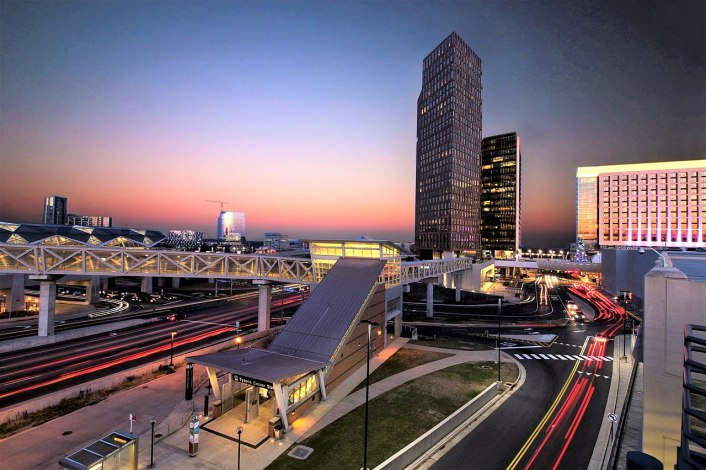
The Arlington-based quartet — Commonwealth Cyber Initiative Research Director Eric Burger, integrated security professor and business information technology faculty member Wade Baker, CCI Executive Director Luiz DaSilva and Virginia Tech National Security Institute Associate Director William “Chris” Headley — were cited in a news release last week.
Their choices for cybersecurity issues this year are:
- Illegal robocalls and other scams could explode, due to decreased regulation of scam calls and texts, combined with increased efforts from scammers, according to Burger.
- Cyber defense can be a money game, and while big companies will have more money than smaller ones to address the issue, both will have plenty to do assessing risks, weaknesses and mitigations, Baker said.
- Artificial intelligence tools continue to advance and proliferate, and hackers will find them useful in developing more sophisticated cyber attacks, DaSilva said.
- Such everyday tech as monitors and keyboards can produce unintended electronic emissions, or emanations, that could accidentally leak secure information. Detecting and addressing those emanations is the next stage in wireless security, according to Headley.
Biotech company plans Thursday grand opening for Roanoke plant
A Roanoke company working to deliver breakthroughs in cancer and cardiac medicines is opening its clean room manufacturing plant on Thursday.
Management at The Tiny Cargo Co., a spinoff from Fralin Biomedical Research Institute at VTC, says that its facility in Northeast Roanoke marks a “major milestone” for the company and for the Roanoke region as a player in advanced life sciences, research commercialization and high-tech manufacturing.
The 7,000-square-foot renovated building at Fugate Road Northeast, near Plantation Road, will house clean room space, offices, storage and shipping. The clean room, at 2,000 square feet, will provide a contamination-free environment to work with materials, and the company might eventually add a second clean room, company co-founder Spencer Marsh has said.
Now that it is opening, Tiny Cargo will take up to 250 gallons of milk every week or so from Franklin County’s Homestead Creamery. The company has been getting unpasteurized milk from Homestead for about five years, though in much smaller amounts.
Marsh and company co-founder Rob Gourdie lead a team that extracts exosomes from milk cells. Cows use those vessels within the cells to impart proteins supporting immunity, growth and more benefits to their calves. Exosomes can be used to transport peptides to humans for medical purposes.
New website promises single source of truth for regional events
Folks looking for event information in the Roanoke Valley have a new, built-from-scratch option.
A website called supnoke.com has gone live, offering its services free for users and venues. The URL, short for “What’s up, `Noke,” is accessible online or via smartphone app.
Supnoke allows for browsing by category, with options to save favorites, set reminders and share events, with all listings linked to official venue and ticketing pages, according to a news release from site founders and Roanoke residents Craig Dennis and Marissa Lorenz.
Dennis, in an email exchange, said that no WordPress, Wix or Squarespace was involved in Supnoke’s construction.
“I’m a long time (25+ year) professional end-user desktop + web software developer, serial entrepreneur, and I built the platform myself over the past 18 months, nights and weekends,” he wrote.
