In the late 1960s, Sherman Lea and a few buddies at Southside High School near Danville scored some tickets to see the Central Intercollegiate Athletic Association basketball tournament in Greensboro.
The teens’ escapade across the North Carolina border was part joyride and part enjoyment of the annual spectacle inside the cavernous arena called Greensboro Coliseum.
And the daring trip was done with the knowledge that watching players like Winston-Salem State University star and Salem native Bill English was a heck of lot better than being in English class.
“Danville was about 40 minutes from Greensboro,” Lea reminisced recently. “A lot of our teachers were alumni of those schools. We’d get tickets. We’d get in a car. I’d tell my parents it was a football game or something you were going to. They didn’t follow up on it. It was an easy fool. They didn’t know we were skipping school.
“Good times, popcorn, watching basketball, pretty cheerleaders.”
This weekend, Lea will return to the CIAA tournament, and this time he will not need a ticket.
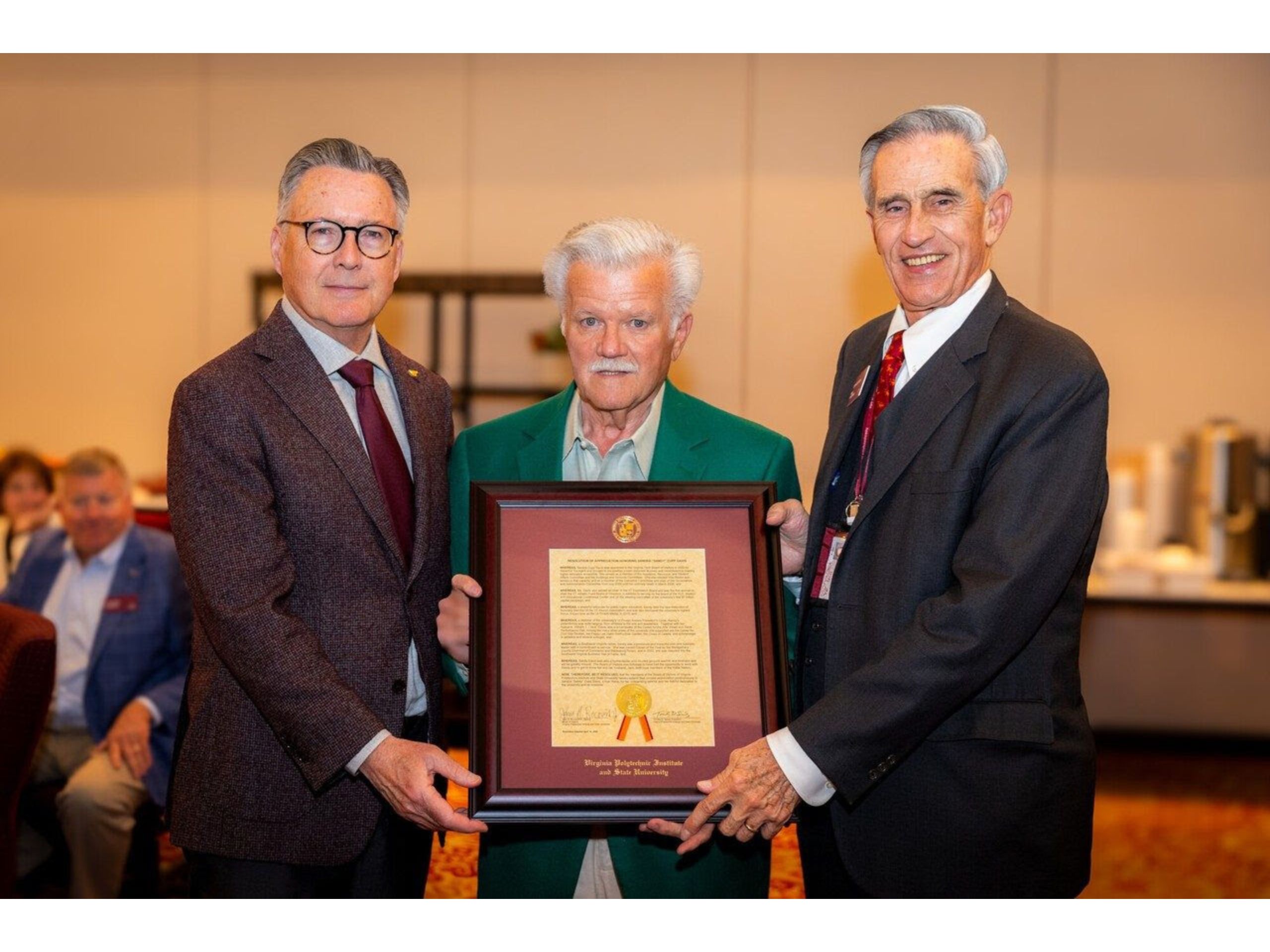
The former Roanoke mayor will be inducted into the CIAA Hall of Fame during a ceremony Friday morning in Baltimore in conjunction with the conference’s men’s and women’s tournament.
Lea starred as a football player from 1971-74 at Virginia Union University in Richmond, where he was inducted into that school’s sports hall of fame twice — individually in 2019 and again in 2021 when VUU’s 1973 squad was honored as a group after winning the school’s first conference championship in 50 years.

Lea downplayed his personal accomplishments at Virginia Union, where he was an All-CIAA honorable mention selection and a choice on VUU’s 1970s All-Decade team as a 6-foot-3, 255-pound center.
He said mere athletic achievement is only one of the criteria used by the CIAA, an NCAA Division II conference composed of Historically Black Colleges and Universities.
“A lot of it is they feel if you’ve done something, not only in athletics, but to help the educational process,” Lea said. “Athletics pushes you out there, but there are other things they consider.”
Lea’s resume includes plenty:
- Eight years as mayor of Roanoke
- Two years as Roanoke’s vice mayor
- Twelve years on the Roanoke City Council
- Five years on the Roanoke City School Board, including chairmanship
- Thirty-six years with the Virginia Department of Corrections
- First Black chief probation officer in Virginia
- Member of Virginia Parole Board
- Former member of Virginia School Board Association
- Former chair, Total Action for Progress board of directors
- Founder of Western Virginia Education Classic football game
- Served as a high school and college football and basketball official
Lea’s influence within the CIAA powers-that-be already has been felt across the Roanoke Valley.
When the North Carolina-based conference was looking for a site to hold its football championship game in 2016, Lea helped bring the event to Salem Stadium, where it was held eight times despite the fact the closest CIAA school is a two-hour drive.
Coincidence or not, with Lea’s eight-year tenure as mayor having ended in December, the CIAA final will move to Durham, North Carolina, for at least the next three years.
When the folks in Salem made their initial pitch to host the championship game, they needed someone to seal the deal with the visiting CIAA representatives. They summoned Lea in as the closer.
“We had our presentation, and we brought [the CIAA officials] up to look at everything,” Salem civic representative Carey Harveycutter said. “They toured the facility. We had breakfast at Mac & Bob’s and we went to the stadium. Then we went out to the Sheraton, and Sherman spent 35 or 40 minutes describing to them what the CIAA meant to him, how much he loved it, how he played, how he had been an official and there would be no better place to come and do this championship than right here in this stadium.
“We would never have gotten it without Sherman. Never.”
Lea wasn’t exactly certain what the future would hold when he was growing up in the Pleasant Grove section of Pittsylvania County.
He attended Southside in Blairs — one of the county’s two Black high schools — until Pittsylvania integrated its schools in 1969. Suddenly, Lea found himself as a senior at formerly all-white Dan River High in Ringgold.
“It was tough,” Lea said. “To lose your school, your school colors. “We used to be the Rams. We’re no longer the Rams. We’re the Wildcats. The colors were blue and gold. Those things didn’t make a lot of difference to me, but a lot of people had sentimental value to it.
“There was a little friction for a while, but things got better. I admire the way people handled it. To me, athletics was the key to that, to a degree. I think they did it with good intentions, but I don’t think they thought through every phase of it, how people felt.”
Lea’s parents were Caswell County, North Carolina, natives who graduated from high school but did not attend college. His father, Charles, worked at the local Goodyear Tire and Rubber Company plant. His mother, Christine, worked in a laundry. Lea had an uncle who was a preacher and a grandfather who was a trustee at a Baptist church.
“I lived in a community where a lot of folks didn’t work, or they had jobs in tobacco or at Dan River Mills,” he said. “We were fortunate in that we had a lot of things some of the neighbors in the community didn’t have. A car, and some parts of our community didn’t have running water.
“I was blessed, because my parents always worked. They always emphasized, ‘You’re going to go to school. You’re going to go to church.’ No discussion. ‘Sunday you’re going to go to church. You’re going to go to school and you better bring home some good grades.'”
After graduating from Dan River in 1970, Lea planned to begin his CIAA football, not at Virginia Union but instead at Shaw University in Raleigh.
He packed a suitcase, checked in for August football practice, then nearly beat his father back home to Danville.
“I went down there and enrolled, but it was my first time being away from home,” he said. “I went down there before school started and they were renovating the dorms. You had to stay in trailers. You heard guys kicking the walls, yelling ‘We’re going to kick these freshmen.’
“The coach wanted me to stay down there. I said, ‘I’m getting out of there.’ Grabbed a suitcase got on a Trailways bus.”
Lea might have embarked on a career crafting tires for Goodyear had it not been for a local coach named Robert Barksdale.
“He knew the value at the time of education,” Lea said. “I had decent grades, but I wanted to get out of school and do something [else], you know. He said, ‘You can do more than that.'”
Barksdale called legendary VUU coach “Tricky Tom” Harris with the news that he was transporting a young prospect to the Richmond campus. Lea, whose nickname in college was “Sugar,” signed up to play football for head coach Willard Bailey, and the rest became CIAA history.


Virginia Union’s 1973 team in Bailey’s third year as head coach finished 9-1, including a school-record four consecutive shutouts. Lea pursued a professional football career, but the idea gained very little traction despite a somewhat overblown rumor that the Dallas Cowboys were interested in his services.
Lea received a general letter from America’s Team, informing the VUU graduate that he was at least on their radar and to be prepared to work out if Cowboys representatives happened to be in the area.
It was 15 minutes of fame.
“What they did was they sent [the letter] to your home,” he said. “My parents got that and opened it up, and they just thought I was going to the Dallas Cowboys. They thought I was set for life. It was just a brochure. They call you. You don’t call them.”
Dallas did call Lea’s teammate Herbert Scott, who lined up at offensive guard for the Panthers. Scott was one of 12 rookies selected by the Cowboys in the 1975 draft who helped Dallas reach Super Bowl X, where they lost to the Pittsburgh Steelers.
Lea had a better shot at professional football with the fledgling World Football League, which persuaded longtime stars like Larry Csonka, Jim Kiick and Paul Warfield to jump ship from the Miami Dolphins in a grandiose attempt to compete with the NFL.
Lea tried out with the WFL’s Philadelphia Bell, but the closest he got to the pros was dressing near the locker of former Philadelphia Eagles NFL All-Pro lineman Bob Brown in the locker room shared by the two teams at Franklin Field.
The Bell waived Lea.
“That was the end of my pro football aspirations,” he said.

The young Southside native had found something a bit more lasting in the meantime. He met a young lady named Clara Schroeter who became his wife in 1977.
Lea had been tooling around Danville in an old Oldsmobile Tornado that his father helped him purchase. One afternoon he encountered two young women at a local car wash. He caught the eye of one of them.
“I saw these two girls,” he said. “I was trying to get either number I could get. The one who gave me her number, I called.”
By then Lea had scrapped a plan to become a high school coach. His path to a sociology degree at Virginia Union did not include the classes necessary for certification as a teacher.
“I always wanted to be a coach, but Virginia Union had a lot of adjunct faculty,” Lea said. “They couldn’t come until after 3 o’clock. As a football player, your classes end at 3 o’clock because you’ve got to go to practice. So I couldn’t take any education classes. I had to take sociology or whatever was available. They thought all of us would be police officers or something.”
Virginia Union had connections with the police department in Baltimore, but there was a good reason Lea did not head north.
“I didn’t want to be a police officer,” he said. “I liked to work with people. They said, ‘How about probation officer in Richmond?’ That was it. That set my pattern for the rest of my career.”
Lea spent most of it in public service, with a particular interest geared toward bettering the lives of young people.
In 2000, Lea and Total Action for Progress president and CEO Annette Lewis started the Western Virginia Education Classic, originally a regular-season football game drawing HBCU teams to Victory Stadium, and later Salem Stadium and other venues, with the benefits going to support the local nonprofit.
No surprise here, Virginia Union played in the first five games.
“We had a dropout problem here in the city,” Lea stressed. “We were ranked No. 2 in the state in terms of [the most] dropouts. TAP had night classes but they lacked funds. We took the funds from the game and gave them to TAP, minus what we paid the teams.”
As city councilman, Lea also teamed with the Roanoke City Police Department and the Inner-City Athletic League to found an outdoor basketball league designed to help youth develop life skills and self-esteem while building a relationship with the local police.
Lea and his son, Sherman Jr., also started the Lea’s Winter Classic, a short-lived high school basketball event that brought eight high school teams to the Berglund Center. The final classic ended abruptly in 2020 when condensation from hockey ice underneath the hardwood floor created conditions too dangerous for William Fleming and Patrick Henry to play their scheduled boys game.
Basketball has not been played at the Berglund Center since that Jan. 11, 2020, stoppage.
You can’t spell ‘league’ without L-e-a
At age 72, the ex-mayor still has plenty of athletic events on his schedule.
His twin granddaughters, Jaylen and Mya Rosser, are on the women’s track and field team at Radford University. His grandson, Jonathan Rosser, has signed a football scholarship at the University of Virgina’s College at Wise following a career at William Byrd High School.
Lea’s son teamed with future NFL running back Lee Suggs on William Fleming’s 1997 VHSL Division 5 state runner-up team, later playing football at UVA Wise.
The Lea family plans to be in Baltimore on Friday to celebrate the CIAA honor, although Clara Lea died in 2021.
Lea will be one of eight individuals inducted into the CIAA shrine during a breakfast at Baltimore Convention Center.
The guy who closed the deal on bringing the CIAA football championship game to the Roanoke Valley is about to close the book on his 50-plus years in athletics.
Of course, there could always be another challenge somewhere.
“They said we’d never have college football again in the city, but we did it,” Lea said. “You can always regenerate it. That’s something I take pride in. The fact [people] said you couldn’t do it and we did it.”