
Editor’s note: This is one in a series of periodic commentaries by retired college presidents on the subject of civility. They are based on the book “Rules of Civility for a Modern Society,” by Jim Davis, the former president of Shenandoah University.
Jim Davis Rule #36
Dr. Jim Davis reminds us that we must celebrate differences among people for a civil society to grow and prosper:
We should celebrate both commonalities and differences in our society. While it is no doubt easier to work, play, and live with people who share similar values, interests and beliefs, we rarely have the option of only living among people like ourselves. Learning to accept and feel comfortable with those who are different from us can be challenging but is how civil society advances.
World Cup lessons in civility
Athletic competitions provide us with many lessons for living civilly in situations where differences are common. An excellent example is the 2026 World Cup currently underway in the United States, Canada and Mexico.
Across the world, the largest spectator sporting event is the World Cup. Billions of people will watch in-person, on-line, or on television. By comparison the Super Bowl commands the attention of over 126 million spectators. The World Cup lasts for 39 days, compared to three weeks for the NCAA basketball March Madness tournament. The World Cup is aptly named.
Gathering the world into one gigantic contest focuses the attention of the entire planet. Part of the attraction of the World Cup is the fierce competition between not just different teams but between different countries. In 2026 there are 48 countries vying for the coveted Cup.
A major question is how is civility promoted and maintained in this highly competitive environment with so many differences among competitors? Having players and fans from 48 nations characterized by different uniforms, national anthems and traditions competing for the most prestigious prize in sports seems a likely formula for conflict and incivility.
But it happens! Here are a few conditions that make the World Cup possible and are also fundamental for creating a civil society that values similarities and differences.
Fairness for all
The game is played under regulated conditions with clearly defined rules. There is one rule book that governs all aspects of the game. For example, games begin with a coin toss to decide which side gets the ball or which goal they will attack first. The expectation is that referees will “call it both ways,” ensuring fairness.
Similarly, societies are governed by agreed upon rules. The Constitution is our agreed upon “rule book.” There are other rules we follow as well, ranging from federal and state laws to local ordinances. Speed limits and traffic signs ensure public safety and are part of our daily rule following. It is frightening to drive without traffic rules. Cities and towns have zoning and noise ordinances. Agreeing on the rules of living in society means we can count on everyone being treated fairly.
Referees are a necessity
While World Cup athletes follow the same rules, disputes are inevitable. Referees can call fouls and in extreme cases even disqualify players who break rules. Games would not be possible without good referees.
The judicial system personified by judges is the “referee” in civil society. A respected and fair judicial system is required for a civil society to function well.
Style differences deserve respect
World Cup players and teams have varying styles of play. A knowledgeable soccer friend says that the styles of play of the various teams are quite different. Spain, for example, is known for a possession style of play featuring short passes and control of tempo, while the English play a straight-ahead style moving the ball forward. As long as the rules are observed, we can do things differently and still compete fairly.
Fans have their own styles including dress and cheers and all are passionate for their team. This is true whether the competition is a youth recreation league, a high school football game, or a collegiate or professional game or match. These differences contribute to the excitement and enjoyment of the event.
The same is true in society. We can have different lifestyles, dress differently, speak differently, and still work and live together harmoniously. It takes understanding and mutual respect, but as Dr. Davis said, “when we are able to feel as comfortable with persons who have significant differences in belief structures, we advance civil society.”
Resentment and grievances do not determine outcomes
We all know that bitter rivalries often result in hard feelings between players and fans of different teams. There are countries competing in the World Cup that have gone to war previously. Somehow, they are able to overcome their differences and still compete. Personal feelings do not determine the outcome when the competition is fair and the referees are respected.
Similar challenges exist in society, especially among people who do not respect and strongly disagree with one another. We maintain civility when rules are followed, disputes are adjudicated fairly and we strive to understand and embrace our differences. The alternative is conflict.
What happens when civility breaks down?
We’ve seen what happens on the field and in the stands when tempers boil over — fights break out, things are thrown, and injury and property damage may occur. As a result, teams may be penalized, players and fans ejected or contests canceled. Things get ugly when fairness, rules and referees are ignored.
In society, civility can break down as well, and the alternative to civil behavior is social disorder and chaos. This reality serves as a reminder that civility is fragile and is worthy of being promoted and defended.
The World Cup is a good model of civility
The World Cup presents us with obvious lessons for living together civilly. We can be heartened by the fact that 48 nations with passionate fans can be organized in a manner that produces the world’s greatest and most watched athletic tournament.
If 48 competing countries can model civility, so can we.
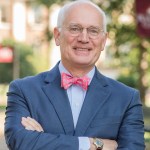
Michael Maxey is the former president of Roanoke College.