
Three Republicans are seeking the nomination for U.S. Senate and the chance to unseat Sen. Mark R. Warner, the three-term Democratic incumbent and former Virginia governor.
About the primary
Early voting is underway (although many polling locations may be closed on Friday for the Juneteenth holiday). You can see what other offices are on the ballot in your locality and where those candidates stand on our Voter Guide.
The GOP Senate primary on Aug. 4 features Bert Mizusawa and David Williams, who each bring military and security credentials to the Senate race, and Kim Farington, who stresses her financial acumen and ability to root out government inefficiency.
Each candidate spoke to Cardinal News about their priorities if elected, the state of the race, what matters to voters in southwest Virginia and how President Trump might affect the outcome in swing-state Virginia.
They are presented here in alphabetical order.
Kim Farington

Kim Farington, from Fairfax Station, is a certified public accountant who spent more than three decades in federal government, including the departments of Defense and Agriculture, plus the Office of Management and Budget.
She capped her public career by serving as chief financial officer of the First Responder Network Authority. The agency under the Department of Commerce oversees the nation’s communication network dedicated to emergency responders and the public safety community.
That experience, plus her earlier stints in federal government, opened her eyes to financial inefficiencies that she wants to address if elected senator. (Editor’s note: We’ve deleted a budget figure Farington cited because we’ve been unable to verify it.)
“I’m going to hold programs accountable as I did throughout my entire career,” she said. “When you hold programs accountable, they become more efficient because they know they’re being monitored.”
She said inefficiency and abuse exist inside and outside of government, and she wants to work on reforming acquisition and streamlining processes.
“We send folks to Congress who know how to spend money, but they don’t know how to track it,” she said. “I know how to follow the money. That’s my bailiwick. That’s what makes me different.”
Farington said she has visited southwest Virginia some 15 times since launching her election bid and has already committed to opening her first office in Wise County. She wants to incentivize employers to take advantage of vacant manufacturing sites while securing a commitment from them to hire Virginia residents
She also wants to develop a cybersecurity center of excellence in the region, possibly working with academia or foundations. Cybersecurity jobs are in high demand, and the center could train a new generation of students in the field.
Now retired from federal service, Farington founded KTech, a small business with a focus that includes financial management and cybersecurity. She is also an inventor and has patented her own form of USB storage cases.
She is a big supporter of President Trump’s agenda and singled out the anti-fraud task force headed by Vice President JD Vance.
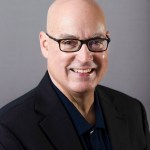
Bert Mizusawa

Bert Mizusawa is a retired U.S. Army major general who went on to serve as a deputy undersecretary of the Army and, notably, a staff member on the Senate Armed Services Committee, where he hopes to land a seat if elected.
He now heads a McLean-based consulting and technology firm.
Mizusawa was a senior national security adviser on President Trump’s first campaign. Later, he served as a senior adviser to the CIA director, providing advice on national security challenges.
“I had some discussion with Mr. Trump when he was a candidate and with President Trump. He took the time to listen,” Mizusawa said. “My goal is to win on my own merits, but I would welcome any support he would be willing to give to me.”
He says his military credentials would give him credibility and influence over defense spending priorities, but that’s not his only focus. He wants to streamline the tax code.
“You almost have to outsource doing your own taxes nowadays for the average person, even if they’re not making a lot of money,” he said. “I would like to make it simpler to file taxes.”
He also wants to balance the budget. “I think there is a lot of low-hanging fruit by going after fraudulently spent dollars,” he said. “My experience with federal spending is that if we tackle the fraud, we will go a long way toward balancing the budget.”
Mizusawa said his staff experience on the Senate Armed Services panel gives him a unique perspective.
“That institution is run by rules,” he said, “and if you don’t know the rules of how it operates, and how legislation gets done, you will be at a disadvantage.”
He is also an attorney, recognizing and understanding the importance of the judicial branch. One of his committee priorities, besides the Armed Services panel, will be to secure a seat on the Senate Judiciary Committee.
During his phone interview, Mizusawa mentioned that he was driving through the Shenandoah Valley down to southwest Virginia. “They say they don’t see enough of us. I’m going to be there. I will be listening to them.”
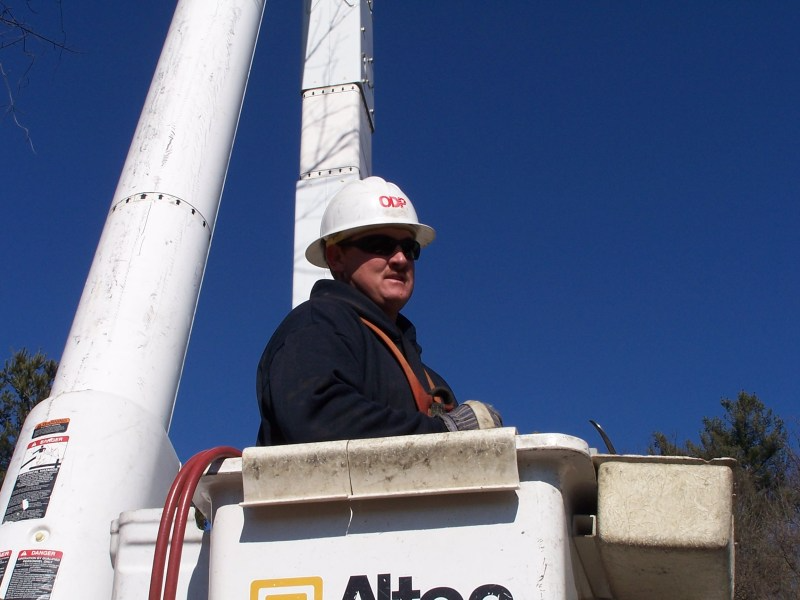
David Williams

David Williams enlisted in the U.S. Navy and Marine Corps, deploying twice to Iraq. There, he led a platoon of Marines and saw combat during his second deployment. After his military service, he worked for the State Department across Latin America and is fluent in Spanish. He then joined the CIA as a case officer, where he served as a chief of station.
He is now a lieutenant colonel in the U.S. Marine Corps Reserves and lives with his family in Reston.
Williams says this combination of experience makes him well qualified to serve in the Senate.
“I’m able to merge all that together, using the carrot and stick, knowing military might but also understanding diplomacy,” he said.
Williams said he decided to run for the U.S. Senate after being dissatisfied with the direction of the country under former President Joe Biden. He said border security was out of control, and he sensed a culture of “lawlessness.”
“As a lifelong conservative Republican, I always knew I would always step in at some point. I didn’t know when,” he said.
He praised Trump for closing the border. “He did what he said he was going to do,” Williams said. “As a nation, we need to support our president and get behind him.”
Williams said there is more work to be done, especially when it comes to the deficit and tax relief for everyday working Virginians.
He said he had the chance to introduce his wife to Trump, who called him “Williams” and quipped that his wife was “much too beautiful for you.” Williams said he heartily agreed and thanked the president for noticing.
Williams said he won a straw poll in the 9th Congressional District in southwest Virginia and vowed to pay attention to the region.
“I spent most of my time starting my campaign in southwest Virginia,” he said. “I did that because I wanted to hear their issues and understand where they are coming from. They don’t see their politicians. We’re going to change that.”
He welcomed Trump’s influence on the ticket as a way of rallying Republicans. “Unifying the Republican Party is going to be key,” Williams said.