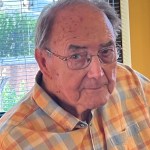

It was cold in Washington, D.C., on Jan. 20, 1977, when Jimmy Carter was sworn in as 39th president of the United States. Despite this wintry weather, unlike that in their native South, Jimmy and Rosalynn Carter of Plains, Georgia, walked briskly and smilingly, hand in hand, down icy Pennsylvania Avenue from the Capitol to the White House, where he would run a tight ship for the next four years.
As I recall, it was even colder that day in Ontonagon, Michigan, on the blustery south shore of Lake Superior. That is where I watched the Carters take their stroll, warm in a downtown furniture store, perched on the arm of a showroom sofa, following the historic event on a new color TV. Then I went back to work as an extension specialist with the Michigan Cooperative Extension Service, offering local officials advice on their outdoor recreation and tourism development options in Michigan’s scenic (but remote) Upper Peninsula.
Three months later I was in Washington in the office of the secretary of agriculture, holding my right hand in the air, being sworn in, together with four colleagues, by Secretary of Agriculture Bob Bergland as an assistant secretary of agriculture, with a portfolio of responsibilities that included oversight of federal forestry, soil conservation and land grant university-related policies and programs.
Much has been made of the unique aspects of Mr. Carter’s campaign and election to the office of president and how he ran that office. Among those aspects was how positions in the so-called “plum book” were filled to staff the Carter administration’s hastily appointed transition team. Those political appointments, I found, were based, just as other hiring decisions are made everywhere, on what the candidate knows and whom she or he knows.
My experience with these proceedings differed from the experiences of those men and women who already had been in the orbits of Mr. Carter and his vice president, Walter Mondale, former Minnesota attorney general and United States senator. Old friends of the new president and vice president had a relatively unobstructed glide path to appointments in the new administration. The rest of us plum book types fell in a different category: new members of the team, considered perhaps not exactly a necessary evil by that core group of Georgians and Minnesotans, but as a group of unknown players, needed to fill out their organization chart.

I’m often asked how I came to be among those chosen to play one of these important roles. After all, I was only a recently appointed assistant professor, teaching environmental policy and learning the Extension Service ropes out in the upper Midwest boonies. Fortunately, my academic connection to a land grant institution and my previous Washington experience as a lobbyist for the National Wildlife Federation and the Wilderness Society allowed the Carter transition team to check the two boxes associated with meeting the requirements of my position, mark that job filled, and go on to fill others on their lengthy list. Here is how I met the two criteria:
“What I knew” was that the position of assistant secretary of agriculture for conservation, research and education had been filled in the past by a land grant university faculty member, because the incumbent supervised the federal Extension Service and State Cooperative Research Service, important sources of funds for the land grant schools. I had earned the Ph.D. “union card” and was invited to join the Michigan State University faculty.
Not using a political loyalty test but seeking qualified people to fill top-level government position vacancies, the Carter hiring team noted my qualifications. I knew my stuff. I had worked seasonally for the Forest Service, studied forestry while earning an undergraduate degree in wildlife management (University of Michigan), done my doctoral dissertation research on litigation related to management of Forest Service-administered lands, been a faculty member of the Michigan State University Department of Forestry, and carried a strong letter of support from the chairman of that department.
(What the transition team didn’t know or didn’t seem to care was that I had helped lead a “Morris Udall for President” campaign with other Michigan State faculty and grad students in 1976 and had welcomed the Arizona congressman, whom I knew and admired from my environmental association work in Washington, when he arrived at the Lansing airport for a rally. “Mo” came in second in the Michigan presidential primary. Carter won.)
“Who I knew” were leaders of the environmental conservation groups in Washington who were willing to advocate for my appointment. From 1962 (when I heard President Kennedy’s conservation speech in the State Department auditorium) until 1969 (when I left the Holy City for grad school), I worked for the National Wildlife Federation and the Wilderness Society, part of a lobbying team with friends with the Sierra Club, National Parks Association, Environmental Defense Fund and other groups. Together, we chased congresspeople around Capitol Hill and convinced them to pass the National Environmental Policy Act, the Wild Rivers Act, several wilderness bills and lots of other conservation legislation. We’d been in the lobbying trenches together for years.
So, when asked by the Carter transition team to suggest someone to oversee the Forest Service, an administrator of much of the National Wilderness Preservation System, those former Capitol Hill teammates of mine thought of Rupe Cutler. They knew my heart.
Meeting the Carter transition team’s criteria was hurdle No. 1. Next, I had to convince the incoming secretary of agriculture, Minnesota Congressman Bob Bergland, that I was the man for his job, and — hardest of all — get the nod from the Senate Agriculture Committee. “Advise and consent” was serious business then.
Bergland, a fellow upper Midwesterner, seemed easy to get along with. I walked with him to his Senate confirmation hearing. As a former House ag committee member, he was a shoo-in. When we parted, he asked me for my East Lansing phone number and called a few days later with a job offer. But nomination is one thing and confirmation is another. My appointment was subject to confirmation by the Senate Agriculture Committee chaired by Herman Talmadge of Georgia.
My Senate confirmation was a trial, almost literally. I sat at the large conference table with the members of the committee, with Senator Talmadge to my left at the head of the table smoking a cigar (would that long ash ever fall off?) and trying to avoid overturning a spittoon on the floor where I could kick it if I wasn’t careful. I was grilled to a fare thee well by a panel of skeptical elderly white men prepared to voice objections to my confirmation using grist given them by the forest products and agricultural chemicals industry who saw this disciple of Aldo Leopold and Rachel Carson as an “extreme environmentalist.” Only the good humor of Republican Senator Bob Dole — “Let’s give the president all the rope he needs to hang himself!” — opened the door for a close vote that moved my nomination forward.

Few people understand what assistant secretaries do. They constitute the “subcabinet” that makes the connection between the ever-changing and highly visible political layer (e.g., the president’s cabinet member, called an “administrator” or a “secretary”) and the semi-permanent, longtime career civil servant level — the men and women who’ve seen presidential administrations come and go and whose natural inclination is to resist policy changes. Excuse the cliché: It’s where the political rubber meets the bureaucratic road. It’s where the president’s stated goals take the form of government actions, through major new rules and regulations and incremental day-to-day decisionmaking.
My challenge as an incoming assistant secretary was quickly to get a grasp on the details of what my agencies did and how they did it, and to establish a responsive relationship with the career leaders of my agencies or change them. I replaced the administrator of the Soil Conservation Service for continuing to ditch and drain precious wetlands, ignoring my orders. The Forest Service, a proud professional, semi-autonomous agency, was unused to constant oversight from the assistant secretary but took my direction with good grace. My job was to make decisions every day that reflected President Carter’s philosophy of government. “What would Jimmy do?” became my mantra. I knew he was a conservationist, and so was I. (He was a model farmer from the standpoint of soil and water conservation practices, and, incidentally, we shared the hobby of birdwatching!)
I was given almost complete discretion to follow my own instincts. Secretary Bergland, busy selling American farm products abroad and meeting with farm groups, said, “Rupe, run your shop, just don’t embarrass me.” I did and I didn’t. He had my back when the manufacturers (Dow Chemical) and applicators of the herbicide 2,4,5-T pounced on me for restricting its use on national forests because a contaminant of that herbicide, dioxin, was causing cancer, miscarriages and birth defects downstream from where the chemical was being sprayed on Douglas fir reforestation projects in western Oregon. Time for a new Forest Service herbicide-use policy. Let’s try a herd of goats instead, in some instances, I suggested.
I was given a free hand to hire my support staff. Betty Sickinger had served my predecessor as his executive assistant (senior secretary), had no problem serving a Democratic appointee after serving a Republican one, and knew the ropes, so I asked her to stay on. I needed an undersecretary to share the load and found the ideal partner in Dave Unger, then the executive vice president of the National Association of Soil and Water Conservation Districts (now the National Association of Conservation Districts). I asked Dave to come on board and concentrate on oversight of the Soil Conservation Service (now the Natural Resources Conservation Service). I invited Oregon Congressman Jim Weaver’s legislative director, Pete Sorenson, to be my personal assistant. Pete’s many services included attending conferences at which I was the speaker and, standing in the back of the hall to hold up a big sign, “TIME TO GO,” to signal I should wind it up before the questions became too difficult!

I became a player in some of the Carter administration’s noted environmental and foreign policy accomplishments, one of them being passage of the Alaska National Interest Lands Conservation Act, or ANILCA. It provides special protection for 157 million acres of Alaskan wildland, more than doubling the size of the National Park System. I was pleased to be in the East Room of the White House on Dec. 2, 1980, when President Carter signed the act into law.

(Backstory: As a member of the team that drafted ANILCA, I fought successfully to keep Admiralty Island and Misty Fiords within the Tongass National Forest as national monument wildernesses rather than, as White House staff members close to Interior Secretary Cece Andrus suggested, moving them to National Park Service administration. After all, it was the Forest Service that began designating and protecting wilderness on federal land, with the Gila Wilderness in 1924.)
Less well known is an environmental initiative I embraced without White House permission, hoping for forgiveness rather than asking for advance approval if anything went wrong, called the second Roadless Area Review and Evaluation, or RARE II. Responding to Congressional criticism that the Forest Service couldn’t provide adequate data on roadless areas proposed by private groups for wilderness system protection, and at the suggestion of Forest Service Chief John McGuire, I enthusiastically agreed to the chief’s offer to review every acre of the National Forest System for its wilderness potential.
McGuire’s team found 2,686 “roadless areas” in the 193 million-acre National Forest System. After an intensive review of each one, comparing its wilderness attributes with its development opportunities, we recommended to the president and ultimately to Congress that over 15 million more acres of the National Forest System be designated by Congress as statutory wilderness. Most of these recommendations became law over time. Almost as important, the process created an inventory of all 2,686 roadless areas that became the action agenda of wilderness groups as they sought successfully to enlarge the system, area by area, to its current 112 million acres that also is made up of national park, wildlife refuge and BLM-administered federal public lands — a source of pride among American conservationists.

I was also in the East Room of the White House on Jan. 31, 1979, to watch President Carter and China’s Vice Premier Deng Xiaoping sign documents normalizing diplomatic relations between the U.S. and the People’s Republic of China. I was there because I’d had the opportunity to represent U.S agricultural science on two missions to China in preparation for this ceremony, the first with presidential science adviser Dr. Frank Press from July 6-10, 1978, and the other with Secretary of Agriculture Bob Bergland from Nov. 4-14, 1978. Our Chinese hosts “rolled out the red carpet” for us (pun intended). Our visits took place soon after the end of Mao’s “Cultural Revolution” in 1976. The Chinese then were anxious to catch up with “the West” in the fields of science and technology. (They seem to have succeeded.)
Much has been written about President and Mrs. Carter’s awkwardness in Washington. They were a poor fit for a society built on warm personal relations despite party affiliation (e.g., Republican President Ronald Reagan and Democratic House Speaker “Tip” O’Neill being on cordial terms, as Reagan wrote in his memoirs, friends “after 6 p.m.”). I will never forget hearing about how astounded the Democratic Party “old guard” was at Mr. Carter’s flat refusal to consider attending a proposed big bash to celebrate his election to be held at the Washington Hilton hotel. All the living representatives of FDR’s New Deal, LBJ’s Great Society and all the rest of the donkey crowd were raring to go, but not the Carters.
Working productively with Congress, which usually involves “give and take,” or compromise, was not his strong suit. I was on the stage of the Old Executive Office Building (now the Dwight D. Eisenhower Building) with the secretary of the interior, the secretary of the army, the administrator of the EPA, and Jimmy and Rosalynn on the afternoon of April 18, 1977, when the president announced to a full house of senior members of Congress that he was going to recommend the deletion of funds for 18 long-planned water resource projects and the modification of five more such projects: dams for flood control, power generation, and irrigation; waterways for internal barge transportation and floodwater diversion; and water supply projects like the Central Arizona Project. You could have heard the proverbial pin drop at the conclusion of his remarks. He had taken the legislators by complete surprise, setting his sights on the demise of projects they had based their reelection campaigns on, “pork barrel” examples though many of them were. Not a crowd-pleaser.
Nor was President Carter’s proposed reorganization of the entire federal government, announced on April 6, 1977, at his signing of the Reorganization Act of 1977 into law. “The program will be directed by Bert Lance, who shares my enthusiasm for and serious commitment to the goal of making government work better,” said the president. I served on the White House-based multiagency team tasked with fleshing out this idea. With minor exceptions, it died without a whimper. It foundered, as had all previous such presidential initiatives, on the rocks of congressional committee jurisdiction, which they guarded jealously.
One old chestnut of these reorganization plans was to take the Forest Service out of the Department of Agriculture, move it back to where it began in 1881, the Department of the Interior, and create a Department of Natural Resources. The congressional committees of agriculture, long responsible for how the agency’s $9 billion budget was spent, did not agree and this did not happen.
(Backstory: Word reached me that the forest products industry, not pleased with my pro-wilderness position, was dickering with the White House on this one, offering its political support for this part of the reorg plan IF I would be fired and replaced by an assistant secretary of their choosing. That did not happen either.)

My one-on-one interactions with President Carter were brief and unsettling. Ready to offer him my recommendations on upcoming forestry policy decisions, I found myself instead on the receiving end of his thin smile and his detailed criticisms of my earlier hard-copy submissions on which he had written notes in a tiny hand. I often wondered if the president understood that the Forest Service was in the Department of Agriculture and not under the purview of his old ex-governor friend and secretary of the interior, Cecil “Cece” Andrus. One reason I felt this way was that the chief of the Forest Service, Max Peterson, and I found ourselves having to beg our way into the ceremony for the president’s signing of the law authorizing the creation of the Frank Church-River of No Return Wilderness in Idaho. Cece Andrus, previously governor of Idaho, was the man of the hour, invited to be on the stage to take the president’s thanks for this accomplishment. Granted, Andrus had been the governor of Idaho and a supporter of the designation, but the men who would be responsible for administering the area — the largest contiguous wilderness in the Lower 48 and located in the Salmon, Challis, Payette, Nez Perce and Bitterroot National Forests — were relegated to the role of spectators in the last row of the auditorium. Bummer.
Secretary Bergland, at my request, created an Office of Environmental Quality empowered to oversee the implementation of the National Environmental Policy Act, or NEPA, across all units of USDA. Under the direction of forester and former Forest Service and Office of Environmental Quality staff member Barry Flamm, the OEQ published what was to be the first edition of a series of annual reports on the role of USDA in protecting the environment. Its accomplishments also included organizing a panel presentation in the atrium of the USDA headquarters building by the legislative sponsors of NEPA, including Congressman John Dingell, to celebrate the 10th anniversary of that groundbreaking law that requires all federal agencies to prepare environmental impact statements on major federal projects. Incoming President Ronald Reagan torpedoed the OEQ about the same time he removed President Carter’s signature solar panels from the roof of the White House.
You may understandably assume that when Congress passes legislation and the president signs it into law, that is it — that the agency to which it is assigned will “just do it.” But “just doing it” involves the adoption of rules and regulations, the executive branch’s best shot at translating high-flown Congressional prose into language staff can understand and follow in the field. Not easy, and often very time-consuming. Case in point: the National Forest Management Act of 1976 that gives the Forest Service its marching orders as to how to write a unique management plan for every national forest. It wasn’t until October of 1979 that I was able to sign off as the responsible federal official on the final rules to implement this important law. Prior to that date, a “Committee of Scientists” led by my appointee, ecologist Art Cooper of North Carolina State University, labored through many drafts, field hearings and repeated published (and then withdrawn) versions attempting to be responsive to all those with an interest in how our national forests are to be managed. The result — multidisciplinary plans providing for fish and wildlife and wilderness protection, not just timber sales — was worth the effort.
One sacred tenet of the Forest Service’s is “even-flow sustained yield” timber harvest, meaning that it will sell no greater volume of timber each year than can be grown in that time. President Carter’s “inflation czar,” Robert Strauss, sent a representative to my office to tell us to sell national forest timber below the cost of conducting the sales and building the necessary access roads — essentially giving federal timber away — to reduce the cost of lumber in new homes and strike a blow at the high cost of housing. I doubted this was a good idea, but we followed orders.
As spokesperson for President Carter at the annual conference of the Virginia Cooperative Extension Service in Blacksburg in 1979, I advised these good folks that it was time for them to integrate their Blacksburg-based white staff and their Petersburg-based Black staff into one program. As the political appointee over the Economic Research Service, I directed its administrator to step up that agency’s research efforts in the areas of organic farming and gardening and integrated pest management (pesticide spraying based on need rather than on the calendar) and to create a new garden in the National Arboretum in northeast Washington to show homeowners which shrubs and trees to plants to attract birds to their yards. Every day, as Sen. Tim Kaine says his father-in-law, Gov. Linwood Holton, used to remind his family, was “opportunity day.”
Thank you, Jimmy Carter. To serve in your subcabinet, given so much discretion, to do my bit to turn the federal enterprise in the direction of a healthy, beautiful and sustainable environment, was the opportunity of a lifetime.