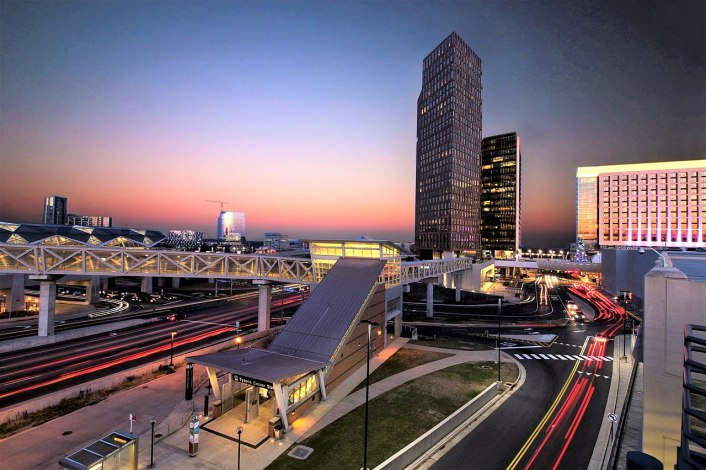


All Roger Ayers wanted from a trip to Indiana 26 years ago was to get a foot in the door.
And here in 1998 at the Indianapolis Downtown Marriott, the Southeast Roanoke resident stood at the hotel registration desk, bag slung over a shoulder, inches away from his dream of becoming an Atlantic Coast Conference basketball official.
Until the door didn’t budge.

“Sorry, Mr. Ayers, your room isn’t ready,” the desk clerk said. “We were sold out last night. I have no idea when you can get in.”
The ACC might have given Ayers an airplane ticket to Indiana for a three-day tryout to fill two vacancies in its officiating roster, but the road he really took to Indianapolis was a long one.
Recreation leagues, high school JV and varsity games, Division III assignments in the Old Dominion Athletic Conference were among the whistlestops that landed Ayers on the doorstep of refereeing in the nation’s most prominent college basketball conference.
And now they’re saying the hotel room isn’t ready?
What would you do?
Ayers? He made the correct call.
“Sure. No problem. Yes ma’am. I’ll just go get something to eat and come back later,” he said to the women behind the desk.
Ayers turned and took five steps in the other direction until the clerk stopped him in his tracks:
“Excuse me, Mr. Ayers. Your room is now ready.”
That unexpected news did little but confuse the frazzled Ayers’ nerves. He paced in his room as the clock ticked toward a 7 p.m. meeting in the hotel ballroom, where 60 contenders for those two narrow job openings were summoned.
As the session began, Ayers surveyed his competition, much as he did as a sophomore at Patrick Henry High School before he was cut from the JV basketball team.
In this room with Ayers were referees he recognized from watching televised games. Meanwhile, a big notch on his resume was what, Roanoke College vs. Lynchburg?
“What am I doing here?” he wondered.
Minutes later, everyone in the room saw what he had just done.
The room went dark. A video screen was lowered. Then came the most important video replay of Ayers’ life.
The camera was focused on the hotel registration desk, showing other applicants for the ACC officiating jobs attempting to secure a room and getting the same response Ayers received. Many of them were not pleased.
Then Ayers appeared on the screen. He watched his interaction with the desk clerk and had one thought:
“Thank you, Mom and Dad.”
Three days of on-court evaluation took place, and soon afterward in Roanoke, Ayers answered an incoming call from a familiar number with a 336 area code: ACC headquarters in Greensboro, North Carolina. On the other end was ACC assistant commissioner Fred Barakat.
Ayers had passed both tests.
“‘We have two contracts and I’m going to give you one,'” Ayers recalled Barakat saying. “‘The reason we’re hiring you is we feel like we can trust you when nobody else is watching.'”
* * *

When Ayers walked onto the court at State Farm Stadium in Glendale, Arizona, on the night of April 8 wearing a striped shirt and a whistle around his neck, plenty of people noticed.
A crowd of 74,423 — the third-largest in NCAA basketball history — had assembled to watch Connecticut claim its second consecutive NCAA men’s championship with a 75-60 victory over Purdue.
Another estimated 14.8 million viewers viewed the game on live television.
While it was the 58-year-old Ayers’ sixth NCAA Division I Final Four assignment, it was his first national championship game, joining third-timers Jeffrey Anderson and Terry Oglesby on the three-man officiating crew.
Ayers was selected as an alternate in the 2012 tournament. He worked national semifinal games in 2016, ’18, ’22 and ’23.
However, now he had reached the pinnacle of his professional career.
“When I walked out there I stood at midcourt and said, ‘Thank you, Lord,'” he said. “It’s like Christmas Day when you’re a little kid. For a referee, that’s the call you want. I got emotional. I got teary-eyed. The Final Four, that’s the dream for any official. But when they said, ‘We’d like you to work Monday night,’ I was silent. They said, ‘Are you there?'”
* * *

When Ayers received the call on April 1 notifying him of the assignment, he actually was at Blue Ridge Memorial Gardens in Roanoke honoring his mother, Lorraine, who had died 25 years earlier to the day.
Ayers’ father, Roger Sr., died in 2017 after working for three-plus decades at the General Electric plant in Salem.
Ayers grew up on Sixth Street Southeast in Roanoke, where going to work meant getting the job done.
“Never really had a lot,” Ayers said. “Grew up with free lunch, going to Goodwill and buying clothes because that’s all my parents had. I didn’t know any different. When I finally got to go to PH there were some kids from the other parts of the valley I went to school with, and they were laughing at my clothes. That hurt a little bit, but looking back now it’s probably what made me the person I am today. I appreciate things a lot more now.
“My father worked for 35 years on an assembly line at GE. I can still see the black lunch pail he carried with the thermos in it. My mom would make those bologna sandwiches the day before. That’s what I’d eat going to school too.”
The closest Ayers got to becoming a basketball player was the day his father mounted a backboard on a telephone pole in the back yard. When Ayers needed to practice free throws, his mother gave him a bag of flour to make a foul line in the grass.
Ayers’ playing career ended before it started. He was cut from Patrick Henry’s JV team by Woody Deans, who later won two Virginia High School League state championships as the Patriots’ varsity coach.
“When I got cut that day, I went home and told my dad,” Ayers recalled. “He said, ‘OK, get in the car.’ He took me out to Food World out on Hershberger Road. He told the manager, ‘My son needs a job.’ I went from getting cut at 3 o’clock to 5 o’clock bagging groceries.
“One day I told my dad I’d like to make some more money. He said, ‘I’m glad to hear that, Son. There’s a lawn mower out back.'”
* * *

Ayers briefly attended Virginia Western Community College and worked in the grocery business after graduating from Patrick Henry in 1983 before realizing that higher education was not in his future.
“College was not for me,” he said. “I had already gotten a taste of making money.”
Little did Ayers know he would have a big appetite for officiating.
He played basketball in a local adult league where he once was assessed a technical foul.
“Believe it or not, I was not happy with the officiating,” he said.
One day in the mid-1990s, Ayers went to watch a friend referee several games in a recreation league at Salem Baptist Home. He left unimpressed.
“All I saw him do was walk up and down the court,” Ayers recalled. “I said, ‘I can do that.'”
So the 29-year-old Ayers called Ted Powell at the Roanoke County Recreation Department and the conversation went something like this:
Powell: “When can you start?”
Ayers: “When do you need me?”
History will note that Ayers’ long road to the NCAA Final began in a Roanoke County rec league and Cave Spring Middle School where his partner, Wade Kendrick, was a local official.
“My claim to fame,” Kendrick laughed. “I was sitting on the bleachers and [Ayers] walks in and I’d never seen him before. So I went over and said, ‘Is this your first year working?’ He said, ‘Actually it’s my first night.’
“I was thinking to myself, ‘Oh my God, this is going to be terrible. I’m going to have to call the whole game by myself.’ If you’d been sitting in the stands you would have had no idea it was this guy’s first game. He was just a born natural.”
Ayers came back the following Saturday and officiated 10 games.
“I loved it,” he said. “I was hooked.”
* * *

Is basketball officiating in the Roanoke Valley nurture or nature?
Regardless, the area has produced more than its share of high-profile and high-caliber referees.
Roanoker Paul Housman officiated in two Final Fours, including North Carolina State’s buzzer-beating victory over Houston in the 1983 NCAA championship game.
Others with Roanoke ties, including Dan Wooldridge, Julian Fulcher, Sam Croft and Duke Edsall, have officiated in the ACC. Northside High School graduate Justin Porterfield has just begun working in the ACC. Patrick Henry alumnus Curtis Blair is a current NBA referee.
In the region, Lynchburg’s Karl Hess and Bluefield’s Mike Eades also reached the top rung of college basketball officiating.
“We’ve got a history of having really good officials going way, way back,” said Western Virginia Basketball Officials Association commissioner Jerry Spangler, who is responsible for assigning referees to work area high school games.
Spangler said Ayers excelled in the two qualities he looks for in an official:
“People skills and work ethic.”
Ayers did not begin at the top. Former WVBOA commissioner Ernie Bradd started him on high school JV games, but it wasn’t long before Ayers was getting plum varsity assignments.
“He was a natural,” Bradd said. “He had a great personality. He knew how to handle people. He could command a lot of respect from coaches. That’s so much a part of it. A lot of people, they wanted to quarrel with them. He could put them at ease about as good as anybody going.”
Anxious to move up to college officiating, Ayers paid $50 to attend a summer camp in Lynchburg run by former NBA referee Donnie Vaden. He used it as a springboard into the ODAC and eventually officiated the 2001 NCAA Division III championship game at Salem Civic Center. Now Ayers runs a similar camp of his own in Lynchburg.
“I had a lot of doors shut and a lot of phone calls hung up,” he said.
Ayers didn’t walk straight into a Duke vs. North Carolina rivalry game when he earned his ACC stripes. He officiated only ACC JV games along with Big South and Colonial Athletic Association games during his first season in the league.
“I moved up so fast, I just needed experience,” he said. “My first year in the ACC, I got no ACC games. But what would happen, on [ACC] off nights at Radford or Elon, for example, a Karl Hess or a Duke Edsall or a Mike Wood or a Larry Rose would work those. That’s where I would go and get to experience the things they do.”
His ACC “debut” was a UNC JV game in Chapel Hill.
“I still have the stub of the check,” he said. “One hundred dollars.”
* * *

Surveys have consistently ranked Ayers among the top five or top 10 college basketball officials in the country, if not higher.
He is certainly one of the most visible.
A site on X — formerly Twitter — called “Roger Ayers Ref Tracker” listed the following statistics for his travels during the 2023-24 season:
- Total games: 108 (career high)
- Miles traveled: 91,832
- States covered: 25
- Most games in a state: North Carolina (18)
- Most frequent team: N.C. State (8 games)
Turn on the television almost any evening during basketball season and Ayers and his familiar slicked-back black hair will show up on the screen.
Consider Thanksgiving week.
Ayers officiated three games in the Maui Classic in Honolulu: Tennessee vs. Syracuse on Nov. 20, Kansas vs. Marquette on Nov. 21, and the third-place game between Tennessee and Kansas on Nov. 22.
He caught a flight to San Diego for a Thanksgiving game between Seton Hall and Southern California and stayed in town for USC’s game on Friday against Oklahoma. Somehow, following a 12:30 PST tipoff in San Diego, he made it to Washington, D.C., in time for a noon tipoff between Georgetown and Jacksonville State.
On more than one occasion, Ayers has officiated a college basketball game somewhere more than 20 days in a row.
“That probably helped me to my divorce,” he said. “Because I was all in.”
The conferences recognize that too much might be too much. However, the coaches want top-tier officials working in their arenas.
Ayers insists his 2023-24 workload was 109 games, not 108. His motivation for such a schedule is simple: College games in Honolulu pay more than trips to Highland County.
College officials work as independent contractors, paid by the respective conferences. Ayers’ primary conference, the ACC, issues his assignments first. He also contracts with other leagues including the Big East, Big Ten, Big 12 and Atlantic 10, filling most of what is left on his calendar.
“If I have a three-day stretch, I don’t want to sit home,” he said. “I can’t make money sitting home. It’s a five-month window.”
The money is good. The major conferences pay in the $3,000-plus range per game. At 109 games in a year, do the math.
Of course, Ayers pays his travel expenses — flights, hotels, meals — out of pocket. It’s one reason he is in and out of a city quickly. Ayers often arrives on an early flight, eats a light breakfast, meets with the other officials on the crew, watches video of the teams and gets some pregame rest. The next day, he’s off on another 4 a.m. flight to another town.
“People say, ‘You’re at Miami, what’s South Beach like?'” he said. “I’ve never been to South Beach in my life.”
* * *
Ayers might have made ripples by giving former Duke coach Mike Krzyzewski a technical foul during an ACC Tournament game, but he is required to keep a low profile off the court.
ACC officials are not allowed to use social media or give interviews during the basketball season. Cellphone use from an arena is all but prohibited. To minimize contact with outside influences, Ayers was not allowed to travel to Arizona for the NCAA Final until the day of the game.
He cited three major changes in college basketball during his 25 years as an official. Along with instant replay, the other two are social media and gambling.
“They’re betting [during] the game, on free throws,” he said. “It’s no more who wins or loses. They’re gambling on everything. It’s certainly not helped officiating. If I’m doing a game, they’re going to bet on how many fouls Roger Ayers calls.
“Ultimately we control a lot of what happens in a basketball game, so it is kind of scary. I’m so paranoid now at tournaments I’ll get a Starbucks and somebody will say, ‘How are you doing?’ and I’ll say, ‘Get away from me.’ You don’t know who you’re talking to.”
Ayers is almost as recognizable as many of college basketball’s most famous coaches.
That has not always been the case.
The veteran official recalled his first on-court experience with the late Bob Knight when the former Indiana icon was coaching Texas Tech in a November 2005 game against Wake Forest at Madison Square Garden in New York.
Ayers’ partners, Doug Sirmons and Jamie Luckie, had this ominous warning about the tempestuous Knight’s policy for handling new officials:
“He’s going to wear you out.”
Instead, Ayers caught no flak from Knight during the first half of what turned out to be a 78-73 double-overtime loss to the Deacons. When the teams returned to the court at halftime, Knight summoned a suddenly confident and puffed-up Ayers to his side.
“In his subtle way [Knight] says, ‘Are you deaf?'” Ayers related. “He says, ‘Blankety-blank- blank, Randy. I’ve been yelling at you the whole first half. You don’t have any credentials to be ignoring me.
“I said, ‘Coach, my name is Roger.’ The next 20 minutes, he knew my name.”
* * *
Ayers might carry a big national reputation, but in some ways he remains the guy who grew up in Southeast Roanoke.
While UConn coach Dan Hurley was still clutching his second NCAA championship trophy, Ayers was halfway out the door en route to a one-week vacation in St. Lucia.
The following Monday, Ayers walked into a Roanoke restaurant to have lunch with Spangler and a handful of local basketball officials flush with pride over their colleague’s success.
“Our first meeting of the year is for all new officials,” Spangler said. “Ever since I’ve had this [WVBOA position], Roger has given up his time on a Sunday to come up and speak to everybody.
“We’re proud of him. We were happy for him. In a sense, we’re living our dreams through what he’s accomplished. And he’s still one of us.”
Ayers really is an everyman.
During the 2021 season, when the NCAA conducted its entire men’s tournament in Indianapolis because of COVID-19 protocol, Ayers had dinner at a restaurant next to his hotel with five other officials.
The next morning he learned he had tested positive for the virus. Ultimately, he was sent home, as were the other five officials who were deemed exposure risks.
Two years later, Ayers got worse medical news.
In February 2023, he officiated Maryland’s upset victory over Purdue as Terrapins fans stormed the court in College Park.
In the locker room, he received a call from his 22-year-old daughter, Laken, telling him she had thyroid cancer.
In support, Ayers’ fellow officials wore pink whistles during the ACC tournament, bringing him to tears.
Ayers said his daughter, a Virginia graduate, is doing well and will soon become a doctor of physical therapy.
“At UVa she had straight A’s,” he said. “She could have went anywhere for PT school. She happened to go to Boston Mass General Hospital, which couldn’t have been in a better place. They found the cancer. They got her in the next day to the oncology department. They scheduled the surgery. It’s how God works.
“When I got the call to go to the national championship, she was my first call. She started getting emotional. She said, ‘Dad, we did it.’
“Yes, we did do this together.”
Will there be more NCAA finals in Ayers’ future?
The Roanoke ref said he hopes to keep up the pace for four more years.
Then he plans to walk out the door that was opened just far enough one day in Indianapolis to get a foot inside.
The arena lights in Arizona came on for the NCAA final.
Roger Ayers’ face was on the television screen.
Millions watched.
He stood at the top of his profession with one thought:
“Thank you, Mom and Dad.”
