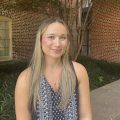


Brenda Robinson Fuller remembers a hush falling over the classroom on her first day at her new school. The other students began to whisper as she made her way to her desk at the front of the class.
It was 1967, and she was the only Black student in her homeroom at Pittsylvania County’s Gretna High School.
“At that young age, when you have all eyes on you, that was frightening,” Fuller said. “You hear the snickering, that type of thing. I heard it, and I tried to ignore it … but I was uncomfortable.”
Fuller had transferred from Northside High School, one of two Black-only high schools in the county in the 1960s. She had attended segregated schools from first grade until ninth grade.
Then, before her sophomore year, Fuller heard about Virginia’s Freedom of Choice policy, which allowed Black students to opt to attend white high schools.
Virginia instituted this policy from 1965 to 1969 instead of fully integrating after the 1954 Brown v. Board of Education decision that ended segregation in public schools.
Today, many people are unaware of the Freedom of Choice era. A Pittsylvania County group wants to change that by making its stories accessible to the public.
The Freedom of Choice committee is chaired by Henry Myers, who graduated from Northside in 1967.
Though he was a student at the time, Myers did not choose to attend a white high school because information about Freedom of Choice was not widespread, and he didn’t know it was an option.
“I was not aware of it,” he said. “The information got to some students and parents, but not everyone.”
It’s been 70 years since the landmark Brown decision. To coincide with the anniversary, the Freedom of Choice committee is concluding a two-year project recognizing Black students like Fuller who chose to go to white high schools.
The committee tracked down and interviewed students, then compiled testimonials that will be housed at the Pittsylvania County History Center by the end of the month.

Freedom of Choice in Pittsylvania
During the Freedom of Choice era, there were only two high schools for Black students in the almost 1,000 square miles of Pittsylvania County.
This resulted in a lot of travel time for many Black students, committee member Margie Richardson said on the PittCo Happenings podcast, which discusses goings-on in the county.
“One was on the northern end of the county and one was on the southern end of the county,” Richardson said. “Half went one way and half went the other way.”
In comparison, there were four white high schools in the county. So when the option to go to those schools became available, many of the students who did so were motivated by convenience, said Myers.
Any difference in quality between the Black high schools and the white high schools seemed to be less of a factor in this choice.
“There were [Black] kids that rode right by one [white] school, and rode for 45 minutes longer to their school,” Myers said. “So when that opportunity came, their parents took that opportunity. That was one of the big reasons, the distance to travel.”
This is why some of the white high schools saw fewer Black students enroll than others.
Gretna High School, for example, was only a few miles from Northside, where Myers went. It wouldn’t have made sense for a Black student to transfer from Northside to Gretna, since the travel time was about the same, he said.
More Black students transferred to Chatham High School, for example, because the bus took them right by on their way to Northside anyway, Myers said.
Five Black students attended Gretna High during this time period, according to Rhonda Griffin, a member of the committee and director of the Pittsylvania County Public Library.
Between 80 and 110 Black students each chose to attend Tunstall, Chatham and Dan River high schools, according to Griffin, who started school in the county in 1975, a few years after total integration.
Most of the students who made this choice were told they had to by their parents, Myers and Richardson said.
This is consistent with Encyclopedia Virginia’s characterization of the Freedom of Choice era, which it says “left the burden of desegregation on Black parents” until high schools fully integrated in Virginia in 1969.
Myers said he wouldn’t have elected to leave Northside to attend a white high school if he had known about the option.
“I was an athlete, I was in the band, I participated in math and sciences,” he said. “I was more than happy, I was in love with the school.”
He did have some classmates who chose to leave, he said, although he didn’t realize why until later, at class reunions.
Those personal decisions helped make total integration smoother, Myers said.
“These students that attended [white schools] under Freedom of Choice laid the foundation for a smooth integration,” he said. “We can say that Pittsylvania County had a very smooth transition compared to other places.”

‘Somebody had to break the ground’
Fuller was an exception to the norm; she didn’t opt to attend a white high school for travel convenience or because her parents told her she must. Instead, she wanted to stick together with her childhood friend, a girl named Gloria, who was transferring from Northside to Gretna.
“She and I went together, we just made the decision,” Fuller said. “And when I talked to my mom and dad … they were very supportive of me.”
But Fuller does remember her mother being apprehensive about her safety. And Fuller herself felt scared about attending a white high school, especially in the first few weeks.
This was made worse by the fact that the few Black students there didn’t have many classes together, or even the same lunch periods.
“The most uncomfortable was at lunchtime,” she said. “When I got in the line to get my lunch, the students kind of moved away. They parted like the Red Sea, like they didn’t want to get too close to me.”
On her first day, Fuller sat alone after choosing a table with one other student who got up and left when she sat down, she said.
“I remember tears welling up in my eyes,” she said. “And when lunch was over, all the kids were lined up in the hallway right by the cafeteria, and they were laughing and saying things, but I just walked to a space by myself. I heard the names I was being called, but I just didn’t respond.”
She remembers going home after her first day and questioning whether she made the right decision. But she credits her mindset and the values that her parents instilled in her for her perseverance.
“When I start something, I’m going to finish it,” Fuller said. “My dad had always told me, ‘There’s nothing you can’t do.’… That’s what kept me going, and that’s what got me through it.”
Fuller and her friend Gloria would pass each other in the halls and wave, and after a while, the rest of the student body began to accept them, she said.
“After I got into class and started doing work, the other students saw that I had the capability to do this,” she said. “The teachers got to know us, and we were passing classes and we were excelling.”
Eventually, Fuller even became close friends with some of her white classmates.
She didn’t find that the quality of education was objectively better at Gretna High School, she said, because there were great Black educators at Northside. But the white school did have more resources, like newer books, and students didn’t have to raise money for supplies like they did at Northside.
She remained one of few Black students at Gretna for two years, but by the start of her senior year in 1969, Virginia had fully integrated its high schools.
Fuller graduated in 1970 and went on to attend Danville Community College and Averett University.
Despite the hardships she faced transitioning to a white school, Fuller said she’s glad she made the decision.
“At the time I would go home and cry, thinking I couldn’t do it,” Fuller said. “Now when I look back, I’m so glad because my baby brother graduated from Gretna High, and I have nieces and nephews who have graduated from Gretna High. Somebody had to break the ground.”

Preserving student voices
The Freedom of Choice committee first met in October 2021 to start the work of documenting stories from this era. The first conversation came up among a group of teachers at Chatham High School, said Richardson, who is also a substitute teacher at Chatham.
In fact, some of the Black students who went to white schools in the ’60s were part of this conversation, she said.
“A couple of them are teachers and teacher aides,” Richardson said.
Finding the rest of the students proved to be a “major challenge,” Myers said. “The best thing we could do was to go back and look at yearbooks.”
Tracking down decades-old yearbooks wasn’t easy, he said. Neither was finding contact information for the students themselves. This was mostly done by asking around and getting phone numbers and names from students they had already talked to, Myers said.
Committee members interviewed as many students as possible with the goal of documenting their experiences. Ten students have been interviewed so far, but the committee hopes to continue the work, Griffin said.
“One of the stories I remember is that one of the proms was actually canceled, because they were afraid that there might be interracial couples that go to the prom,” Griffin said on the PittCo Happenings podcast.
Myers said he heard stories of students, like Fuller, who were “apprehensive and scared” to attend white high schools. They were not only nervous about being around a mostly white student body, but also a mostly white faculty.
“When Freedom of Choice started, there were very few, if any, Black teachers,” Myers said. “They had to find someone they could confide in if they felt that there was a problem.”
Fuller said she remembers one unsupportive teacher, who inadvertently inspired her to become an educator herself.
“She would say things to me in the classroom about how I didn’t have the background that the other children had, and that I couldn’t do what they do,” Fuller said. “It just made me feel like, I’ll show you.”
She went on to teach for 34 years in places like Martinsville, Pittsburgh and Atlanta, where she lives now at 72 years old. And she always worked to build her students up instead of putting them down, she said.
It required a lot of courage for these students to choose to participate in Freedom of Choice, Griffin said.
“It was challenging for them, and this is a history that we need to have on record,” she said on the podcast.
That was a big part of the motivation to complete this project, Griffin said in an interview, especially because so many years have passed and firsthand accounts are few and far between.
“Many of the students are no longer with us, which is why it is so important to record and maintain these narratives,” she said.
The public will be able to view these narratives when they are displayed in the county, and the Freedom of Choice era will also be recognized by plaques at each of the four white high schools that participated.
The first two plaques were unveiled at Gretna and Tunstall high schools at ceremonies Feb. 3, and the Dan River and Chatham high school plaques will be unveiled Saturday.
“The committee hopes that by placing the plaques in the schools, future students will recognize the importance of education,” Griffin said. “[These] students paved the way for today’s students to get an education.”
Fuller, who attended the Gretna ceremony with a few family members, said it was a very touching event.
“I met the principal of Gretna High School, who is Black, and the vice principal, who is Black,” Fuller said. “They were shaking my hand and saying, ‘We’re standing on your shoulders.’”