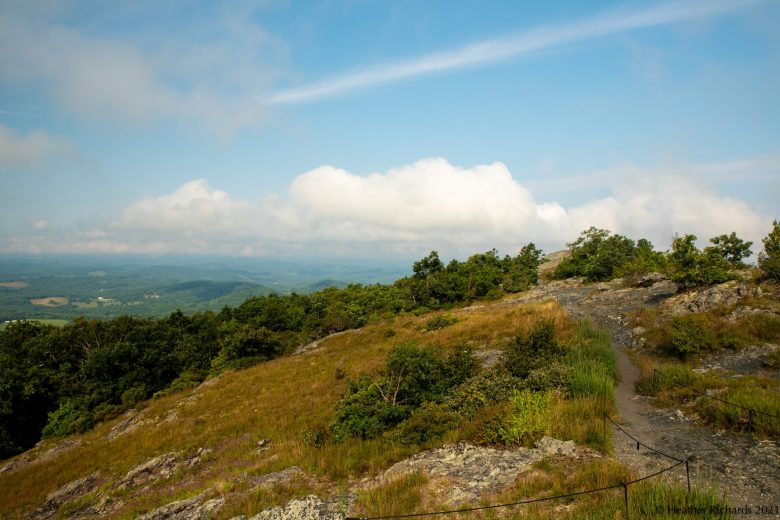
Some residents who attended Tuesday’s public meeting raised worries about traffic and vandalism. Others said the trail will boost tourism and provide more access to nature.
Culture
Cardinal News covers culture and all the stories that are shaping Southwest and Southside Virginia.

Posted inCulture
An 1880 schoolhouse for Black children in Pittsylvania is still standing today because of one former student

The former Harvey Colored School sat forgotten in the woods after integration, until former student Annie Wilson Mosby relocated and restored it.

Posted inCulture
Residents look to historical tourism to preserve Cumberland County’s past and create economic opportunities for its future

There are over 80 churches, homes and other resources with African American historical significance within a state-recognized Pine Grove Rural Historic District designation in Cumberland County.

Posted inCulture
100 years ago, Roanoke was ‘the Black Hollywood.’ A new disc collection preserves what’s left of that legacy.

For three years in the 1920s, the nation’s most prominent Black filmmaker of his era worked out of Roanoke.

Posted inCulture
Early 19th-century Museum Building near Fincastle courthouse project faces potential demolition

The plan up until last Tuesday was to move the building during the construction of the new county courthouse. Project managers told the Botetourt County Board of Supervisors that this won’t be feasible due to the condition of the building.

Posted inCulture
62 years after Danville’s civil rights movement, both the city and the local newspapers have evolved
If mainstream media coverage in 1963 had looked different, perhaps Danville’s civil rights movement would have remained in the public consciousness in the years afterward, one journalism professor said.

Posted inCulture
Botetourt County once stretched to the Mississippi. The Google deal opens the way for a new museum to tell that story.
The state appropriated $6 million in 2022 for a museum in Botetourt, but it’s taken until now to find the local match — and a place to put the facility.

Posted inRedbird
He saw his dad ostracized for reporting on civil rights. She grew up to be the Register’s first Black reporter.
They both came of age in Danville in the 1960s. His father was a white publisher who took a stand on civil rights; her father was one of the city’s first Black reporters.

Posted inRedbird
Straightforward reporting on protests set a paper apart — and caused problems for its publisher
The Commercial Appeal quoted local and national civil rights leaders. It also covered goings-on in Danville’s Black neighborhoods.

Posted inRedbird
Civil rights protesters trusted one Danville paper — and it wasn’t the daily
The “paper of record” could make — or bury — history. But what happens when there’s another paper in town?