The State Corporation Commission, in an unusual move, has ordered three public hearings about the proposed merger of the state’s largest utility, Dominion Energy, with an even larger, Florida-based utility, NextEra Energy. One of those will be in Richmond, two others at yet-to-be named places within Dominion’s service territory.
Meanwhile, Lt. Gov. Ghazala Hashmi has embarked on a “listening tour” of Virginia to hear what people have to say about the proposed merger.
Based on the events she has held so far, many people don’t like the idea. (Disclosure: Dominion is one of our donors but donors have no say in decisions; see our policy. You can also test this yourself by becoming a donor and having no say.)

Utilities are rarely popular and the prospect that Virginia might have an even bigger utility, particularly at a time of rising power bills and the adjacent controversy over the power demands of data centers, is a tough sell with the people coming out to Hashmi’s meetings. Whether it’s popular with the three people who matter most — the three judges of the State Corporation Commission who will rule on the merger — may or may not be a different question. Public opinion may wind up having no impact whatsoever on that decision; we’ll just have to see.
Hashmi’s tour comes to its westernmost point on Sept. 24, with a 6:30 p.m event in Roanoke at the Roanoke City Market Building. Roanoke might seem a curious stop for a listening tour on the Dominion merger because Roanoke isn’t in Dominion territory; it’s in Appalachian Power territory. However, the two Democratic legislators who will be speaking at the event — Del. Sam Rasoul of Roanoke and Del. Lily Franklin of Montgomery County — both say that what Dominion does has a big impact outside its service area.
“As if Dominion is not big enough, this would be the largest utility merger in U.S. history, which would reverberate in Virginia politics, campaign finance and energy capital decisions,” Rasoul said by text message. “Most utility decisions that the legislature makes impact the entire Commonwealth.”
Franklin concurs. “Even though we aren’t Dominion customers, the merger still matters because Virginia’s energy system is interconnected,” she said by text. “Dominion’s growth can drive new generation and transmission projects that cross rural communities far outside its service territory. My biggest concern is making sure rural Virginians and everyday ratepayers aren’t stuck with the costs or impacts of infrastructure being built to serve massive corporate energy users.”
The Roanoke Valley is also home to two Republican legislators who aren’t part of Hashmi’s event but who have definite feelings about the proposed merger. State Sen. David Suetterlein and Del. Joe McNamara, R-Roanoke County, have both called for a special session of the legislature to change state law to give the SCC more time to review the proposed merger.
“Policies affecting the Dominion service area inevitably impact working Virginians’ budgets in every corner of the Commonwealth,” they wrote in their letter to the governor. Neither the governor nor House Speaker Don Scott, who also has the power to call a special session, has thought legislative action is necessary.
Anyway, that’s the rationale for Hashmi bringing her listening tour on the Dominion merger to the largest city in Appalachian’s Virginia footprint. However, there’s another place that Hashmi ought to go that’s even farther west, but which has a unique stake in what Dominion does. There’s also a place that the SCC ought to hold a hearing on Dominion that is outside the utility’s service territory.

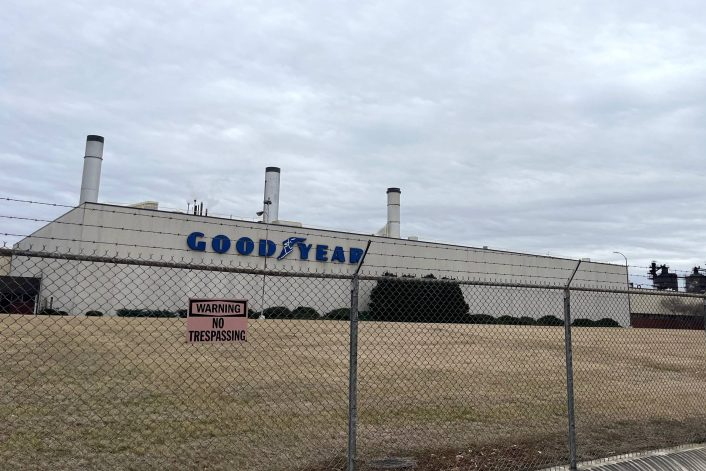
In both cases, that place is St. Paul, on the border of Russell County and Wise County. Why St. Paul, a name that many Virginians in Dominion territory would confuse with the city in Minnesota by the same name? That’s because St. Paul is home to the Virginia City Hybrid Energy Center, a Dominion Energy plant.
Dominion has other energy generation sites that fall outside its service territory. It has a natural gas plant in Warren County. It has the world’s second-largest pumped storage hydroelectric facility in Bath County. Both of those are located in the service territories of electric co-ops that may buy power from Dominion, so many Virginians are indirectly Dominion customers even if they don’t get a bill from the company. (I’m one of those; I’m served by the Craig-Botetourt Electric Cooperative, which buys some of its power from Dominion. As someone within driving distance of Roanoke, I suppose I’m also part of Hashmi’s target audience for the Roanoke event.)

The Virginia City project is different, though. It’s so far west in Virginia that St. Paul isn’t even served by Appalachian Power. The town is served by Old Dominion Power, which, despite the name, has nothing to do with Dominion Energy; it’s part of a Kentucky utility whose territory spills over the border. (That Kentucky utility is, in turn, a subsidiary of a Pennsylvania company). This is a reminder that St. Paul and other parts of Southwest Virginia are closer to seven other state capitals than their own. That’s not even the high number. If you go farther west (and yes, there are parts of Virginia farther west), you’ll wind up closer to eight and eventually nine other state capitals.
What further makes the Virginia City facility unique — and worthy of a listening tour visit — is that state law mandates it close by Dec. 31, 2045. That’s under the terms of the Clean Economy Act, which requires Dominion to go carbon-free by 2045 and Appalachian to do the same by 2050. It’s those requirements that first set off the wave of renewable energy development that Virginians have seen in the form of solar panels across many parts of rural Virginia, particularly Southside.
Virginia City is unique in other ways. It burns a mix of coal, coal waste and biomass, which makes it different from Dominion’s last purely coal-fired plant: the Clover plant in Halifax County that it shares with the Old Dominion Electric Cooperative (yet a third utility in Virginia with “Dominion” in the name).

Those concerned with the confluence of energy and the environment have always despised Virginia City. They see it as dirty, inefficient and the product of political deals to satisfy Southwest Virginia legislators.
For our purposes today, let’s concede that there’s some truth to those criticisms; I am not here to litigate whether Virginia City is a good source of energy or not.
I am here, though, to point out one of those inconvenient facts that complicates many debates about energy: Virginia City is a major employer in a part of the state where employment is often hard to come by. Dominion says Virginia City employs 120 people, plus 36 contractors. That may not seem like a lot of people if you’re sitting in the urban crescent, but it’s a large number by Southwest Virginia standards. A jobs announcement of that size today would rank as one of the biggest jobs announcements in Southwest Virginia over the past four decades — outranked mostly by call centers and at least one company that never even opened, according to the Virginia Economic Development Partnership database.
Over the course of Virginia City’s short history (it opened in 2012), it’s become even more important economically to the region. Employment in Wise County has fallen by 36% from the time when Virginia City was under construction; in Russell County, employment has fallen 25.5%.
Now state law mandates the closure of a major employer. The mandate may help save us from burning the planet to a crisp but it would be a serious economic blow to this part of Southwest Virginia. That’s part of why the president of the Grundy-based Metallurgical Coal Association sent the SCC a letter in support of the merger on the grounds that Dominion has “a solid record” of supporting the Virginia City plant and believes a bigger utility would have more need of Virginia City’s energy. Virginia City’s use of waste coal, Ben Beakes wrote, has enabled Southwest Virginia to clean up a lot of waste coal sites and convert them into future industrial parks. “The vast majority of coal mined in Virginia today is metallurgical coal, used to make steel,” he wrote. “More development requires more steel, which, subsequently, requires more metallurgical coal.” Is he right? I have no idea, although I can imagine that those who don’t think Virginia City should exist in the first place won’t relish the idea of the plant burning even more coal, even if this does mean cleaning up more waste sites.
Even if there were no Dominion merger on the table, and all we had before us was the Clean Economy Act mandates, state leaders owe Southwest Virginia a discussion about how to replace these jobs at Virginia City. It’s not every day that the state orders an employer to close as a matter of state law, but for St. Paul that day is Dec. 31, 2045. That may seem a long way away — 19 years — but we also know that economic development is a long game. In some circles, it’s fashionable to talk about “economic justice” and, in particular, a “just transition” for former coal-mining areas. Here’s a good place to start that conversation in Virginia. Where is the economic justice for Southwest Virginia? If the state is going to mandate that these jobs go away, what will it do to make up for them?
The proposed Dominion merger accelerates this question. What would that merger mean for Virginia City over its remaining lifespan? We have no idea. Maybe nobody knows. However, its future is a topic very much on the minds of people in the region.

I asked state Sen. Todd Pillion, R-Washington County, who represents the area, about the potential merger’s impact on Virginia City and here’s what he had to say via text message: “Virginia City is about much more than producing electricity. It is an important part of the environmental cleanup of Southwest Virginia, taking waste coal from old gob piles that have threatened our streams and watersheds and putting that material to productive use. The facility also supports hundreds of jobs and millions of dollars in economic activity in our region. We have to operate Virginia City at its full potential for a multitude of reasons: environmental, economic and, increasingly, energy security. Southwest Virginia has the workforce, the infrastructure and the energy resources to play a major role in meeting Virginia’s growing demand for electricity. As I have discussed with both Dominion and NextEra, I expect the merger to preserve and build upon that role, not diminish it. I have been assured that Virginia City’s energy production will continue and that they will look at opportunities to increase generation and put additional energy infrastructure in Southwest Virginia. Southwest Virginia has earned its place as the energy capital of Virginia, and I intend to make sure it remains that way. Any future owner of these assets needs to understand that Virginia City is not simply a power plant, it is an economic asset, an environmental reclamation tool and a critical piece of our region’s and the commonwealth’s energy future.”
That’s a lot of words, but it underscores just what a sensitive topic Virginia City is in Southwest Virginia.
There are other reasons why the SCC ought to hold a field hearing in Southwest Virginia and why Hashmi ought to bring her listening tour to Southwest Virginia (and no, Roanoke isn’t Southwest Virginia). Dominion still owns about 2,600 acres in Tazewell County. The utility first bought the land with the idea of building a wind farm; the plan was abandoned after the county adopted ordinances limiting the height of structures. More recently, Dominion explored the possibility of a hydroelectric dam on the property but didn’t pursue that, either. People in Tazewell might like to know what a merger would mean for that land. There’s some sentiment already in the General Assembly for the state to take over approvals for solar projects because some rural localities are seen as too resistant to solar. It’s not hard to imagine the legislature doing the same with local ordinances aimed at limiting wind projects, in which case this Dominion-owned land in Tazewell could come back into play.
What would either the SCC or Hashmi hear in Southwest Virginia about the Dominion merger if they came to either St. Paul or Tazewell or both? I have no idea. However, I can guarantee that in St. Paul both the SCC and Hashmi would hear that people are concerned about someday losing a major employer — if not to the merger, then to the Clean Economy Act. That may not be what either the SCC or Hashmi — or other Virginia Democrats, for that matter — want to hear, but it’s something they ought to hear.
For more political news and insights, see West of the Capital, our weekly political newsletter that goes out every Friday afternoon. During the campaign, I’m giving weekly updates on where things stand. Sign up here: