The economic news lately has not been good, and that was before oil traffic through the Strait of Hormuz was essentially shut down.
The U.S. Bureau of Labor Statistics recently reported that the American economy unexpectedly lost 92,000 jobs in February. Furthermore, December’s job report was revised to show 17,000 jobs lost.
This is not exactly winning.
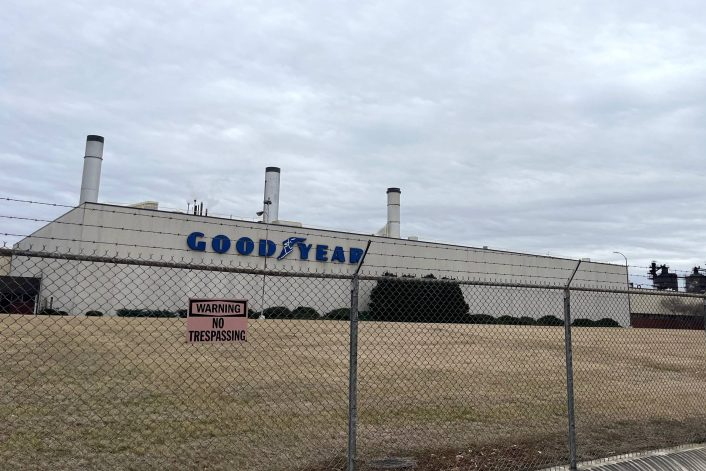
Some of the steepest job losses have come in manufacturing, a favorite metric of President Donald Trump. Since he became president, the nation has lost 100,000 manufacturing jobs, although that’s an incomplete measure. Manufacturing jobs have been declining steadily for years. Since the Great Recession of 2008-2009, manufacturing jobs rebounded slightly and reached their peak under President Joe Biden in January 2023, and have been falling ever since. The total decline since then has been 430,000 jobs, so most of that decline happened under Biden, and before Trump’s tariffs, although Trump’s policies certainly haven’t turned that around. Those trendlines suggest the forces pushing manufacturing jobs down might be bigger than any president — automation being a prime factor.
Gov. Abigail Spanberger was concerned enough about the national numbers that she issued a statement noting that the “job numbers are a reminder that economic uncertainty is not going away any time soon.”
All that is the backdrop to two new economic reports that have come out recently, and have specific applications to Virginia. One is the quarterly economic forecast from the University of Virginia’s Weldon Cooper Center for Public Service; the other is a report from the Brookings Institution that looks specifically at the Washington-area economy, which is important to Virginia because Northern Virginia is the state’s largest regional economy. Neither brings good news.
Weldon Cooper Center forecast: Virginia employment will shrink in 2026
Let’s start with the Weldon Cooper Center report, since it’s broader.
In October, the center forecast that Virginia’s economy, which had grown by 3.3% in 2023 but has been slowing down since, would grow by just 1.0% in 2026.
The center has now revised that downward to 0.3%.
In October, the center forecast that Virginia employment, which was flat at the time, would edge up ever so slightly to 0.1% in 2026.
Now the center forecasts that employment this year will shrink by 0.2%.
The center attributes much of this slowdown to federal job cuts, which hit hardest in Northern Virginia.
“This period is expected to represent the weakest point of the current economic cycle for Virginia,” the forecast says. “Although inflation is projected to remain moderate and population growth stable, these factors are not expected to offset the broader deceleration in output and labor market conditions.”
If there’s good news, it’s that the state’s economy is forecast to grow a little faster in 2027, although the center has revised downward what that growth rate next year will be — from 1.9% to 1.6%.
Forecasts can always change, though, so let’s look at what has actually happened.
Northern Virginia is pulling the state’s economy down
Historically speaking, that’s an astonishing sentence to write. For generations, Northern Virginia has been what’s held up the state’s economy. Now, Northern Virginia is where a lot of the problems are. We saw this indirectly in the recent population estimates that showed Fairfax County losing population from 2020 to 2025. If that continues for the rest of the decade, it would be the first time Fairfax has lost population since the 1820s.
We see this indirectly again in the job statistics (we’ll see it even more directly in an upcoming section, which is what gives me confidence that a lot of the stats you’re about to see originate in Northern Virginia).
Out of 18 official job categories, Virginia lost jobs in nine of them last year. Four of those categories dominated:
Professional service: -11,400
Government: -9,400
Manufacturing: -6,600
Accommodation and food services: -6,000
The Weldon Cooper report says the government job cuts “occurred more gradually” than many expected. “This allowed the labor market to stabilize temporarily before entering the weaker conditions projected for the end of 2025, delaying the economy’s recovery to late 2026,” the report says.
However, many of those professional service jobs are likely to be government contractors, who count in a separate category. Still, between professional service jobs and government jobs, that’s 28,800 well-paying jobs gone from the state economy.
Health care is adding more jobs than any other sector
The health care sector in Virginia added 16,000 jobs last year — and yet a recent report out of Southside, which documented the number of unfilled health care jobs there, showed that’s still not enough. That report for GO Virginia Region 3 by Chmura Economics & Analytics found there are 3,400 health care jobs going unfilled in the part of Southside that runs from Patrick County to Brunswick County.
Construction is another growth area, but what if there’s a data center slowdown?
The sector that’s added the second biggest number of jobs is construction — 8,000 jobs. On a percentage basis, construction is the fastest-growing, at 3.7%. “Construction remains one of the more resilient industries in the Commonwealth,” the Weldon Cooper report says. However, it warns: “As much of this construction is directly associated with data centers, the question remains: Will the growth in data centers in Virginia continue in future years?”
That question factors into one of the key issues now pending before the General Assembly: How much should the legislature try to slow down data center growth? And if the current tax incentive for data centers is done away with, as the Senate version of the budget wants to do, what impact would that have on the state’s economy?
The Federal Reserve says there are 224,900 construction jobs in Virginia. The Northern Virginia Technology Council estimates the number of data center-related construction jobs at 14,240, so that’s 6.3% of the construction industry that’s tied to data centers.
Forecast: Government jobs will continue to shrink, but manufacturing and travel will lose more jobs
Weldon Cooper forecasts that in 2026, Virginia will continue to lose government jobs, but at a slower rate — from 9,400 last year to 3,400 this year.
It also sees the loss of manufacturing jobs and travel-related jobs in accommodation and food services, likewise continuing, but at a slower pace.
Manufacturing is forecast to go from 6,600 job losses to 4,600 job losses; travel-related jobs from 6,000 to 4,900.
Spanberger’s office recently announced new manufacturing jobs in Pittsylvania County (1,500 jobs for a rocket manufacturer), Henry County (60 jobs for a car parts manufacturer) and Giles County (46 jobs for a trailer manufacturer). Those localities should appreciate anew the acquisition of manufacturing jobs when manufacturing jobs overall are declining, both in the state and nationally.
Two metros have lost more jobs than any other in the country and both are in Virginia

Brookings has been tracking what the loss of government jobs has been for the D.C. area (which encompasses the whole D.C. metro, not just Northern Virginia). The Northern Virginia side of that is important to those of us in Southwest and Southside because most of our school money comes from the state, and the biggest share of that comes from … Northern Virginia. Unless you want your property taxes to go up to pay for your local schools, you should care about what happens to the Northern Virginia economy because it directly connects to ours — and your wallet.
Brookings says the D.C. metro’s employment base shrank 14% in 2025, with most of that coming later in the year when deferred departures from the federal workforce started showing up in the statistics. “In total, the [D.C.] region ended 2025 with around 56,000 fewer jobs than it had a year prior, with about 54,000 of these jobs (96%) stemming directly from federal layoffs,” Brookings says.
Now for the kicker: Brookings looked at every U.S. metro area with a population of 1 million or more — 55 in all.
Of those, the D.C. metro lost more jobs, on a percentage basis, than any other last year — down 1.7%. Not all of those were on the Virginia side, but enough were that Virginians throughout the state ought to be concerned for the reasons noted above.
That’s not all: The metro that lost the second-biggest number of jobs, on a percentage basis, was also in Virginia — Hampton Roads was down 1.4%.
That means Virginia’s two biggest regional economies lost jobs last year. That’s why the Weldon Cooper Center forecast for next year is so pessimistic.
Want more politics and analysis? Sign up for West of the Capital, our weekly political newsletter that goes out on Fridays. Sign up here: