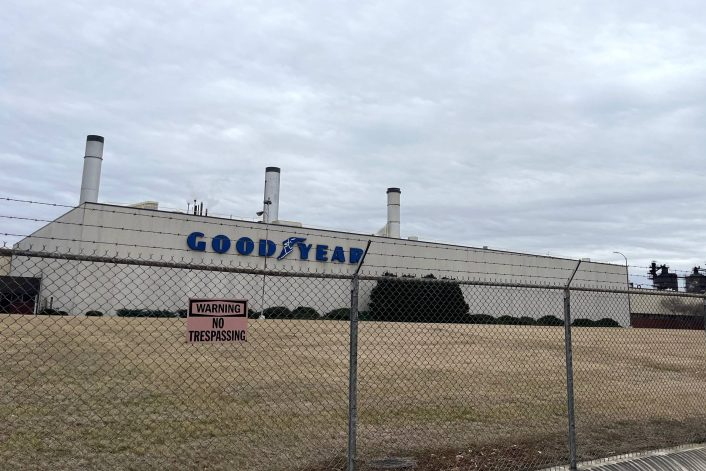
Roanoke wants a casino.
In doing so, it’s laying down three bets:
- That the city can find a legislative sponsor when all its representatives oppose a casino.
- That the General Assembly would pass such a bill when the local delegation is opposed.
- That Roanoke voters would then approve a casino in a referendum.
Much like playing a slot machine, Roanoke casino backers need all three of those to come up “yes.”
Roanoke is also making a fourth, more long-term bet, that the city would suffer no reputational damage from a casino, and perhaps even get a lift.
Casinos sit at the intersection of three things: politics, economics and morality. The first two of those can be quantified, the latter less so. Here’s what we can say so far.
Other casinos had local legislative support; Roanoke does not

Mayor Joe Cobb said the city did not yet have a legislator lined up to introduce enabling legislation in the General Assembly. The three legislators who represent all or part of Roanoke — Democrat Sam Rasoul, Republican Joe McNamara and Republican David Suetterlein — quickly signaled their opposition. So did some others, such as state Sen. Chris Head, R-Botetourt County, who formerly represented part of the city and who sits on the Senate committee that would take up any casino legislation: “I am completely and totally opposed to a casino coming to Roanoke and I will oppose it viscerally and vehemently with every fiber of my being. This would be a disaster for our great city. I want nothing to do with a casino in Roanoke. I will work with everything I’ve got to make sure this doesn’t happen.”
All the other casinos that have been approved in Virginia — Bristol, Danville and Portsmouth, which are in operation, and Norfolk and Petersburg, which are on the way — had the support of local legislators.
Roanoke begins its quest for a casino in the hole.
Roanoke could try to ally itself with Fairfax County casino backers, but that’s politically tricky
In the absence of a local sponsor, the political route for Roanoke seems clear: Cut a deal with the legislators who have been pushing for a casino in Fairfax County and make it a package deal. That’s both politically appealing and risky. The Fairfax proposal divided the Northern Virginia delegation in the most recent session and failed. (That’s yet another sign of the absence of local legislative support is a problem for Roanoke, because even partial support wasn’t enough to get the Fairfax proposal through.) Senate Majority Leader Scott Surovell, D-Fairfax County, who sponsored the Fairfax casino bill, said he’d heard that Roanoke is interested in a casino, but didn’t know enough about the proposal to comment.
One big obstacle to a package deal is the tradition of legislative courtesy: Legislators from other areas are reluctant to vote for something that that locality’s delegation opposes. State Sen. Jennifer Boysko, D-Fairfax County, was one of the main opponents to the Fairfax casino. “Historically, in my 10 years in the legislature, if the legislators who represent the immediate region don’t want it, we respect that,” she said Tuesday.
That effectively lets three people — the three legislators who represent the city — veto the proposal, but that’s just the way the General Assembly works.
The key pro-casino legislators in Fairfax County may not want to help Roanoke

State Sen. David Marsden, D-Fairfax County, has been a strong supporter of a casino in Fairfax County, which he sees as essential for helping the county’s economy, which is being hurt by falling values for office buildings and federal government cutbacks. He had not heard about the Roanoke proposal, but his first reaction was: “Get your own bill.” And later, after we talked more: “That’s going to have to be Roanoke’s business.” The Fairfax bid may be complicated enough with its own delegation split; taking on a Roanoke casino, against the wishes of the local delegation, could just be too much weight to take on.
“Politically, [a combined bill] makes it less palatable even for pro-casino/gambling people,” said state Sen. Schuyler Van Valkenburg, D-Henrico County, who, like Head, sits on the Senate panel that hears casino legislation. He called himself “a hard no.”
Roanoke already faces opposition from legislators in Southwest and Southside


The legislators who could be Roanoke’s natural allies, regionally speaking, could wind up being its biggest opponents if they fear that a Roanoke casino would divert revenue from the casinos in Bristol and Danville.
Del. Israel O’Quinn, R-Washington County, issued this statement: “The original intent of the casino legislation was to ensure that casinos would be geographically spaced across the Commonwealth. Further, it was required that there be a local referendum to ensure that the local community did in fact want it. A proliferation of casinos was never intended and I suspect both the Southwest and Southside delegations believe this proposal would simply poach business from Bristol and Danville.”

State Sen. Todd Pillion, R-Washington County, said much the same, via text message: “SWVA doesn’t need another casino. Bristol nor Danville’s permanent casino haven’t even been open a year. Roanoke should place their efforts in developing their Blue Ridge Innovation Corridor and expanding their top notch biomedical research center.” Keep in mind that Pillion backed both the Bristol casino and also the proposed one in Fairfax County — but not Roanoke.
Pillion is also a member of the budget-writing Senate Finance Committee, and his reference to Roanoke’s biomedical complex seems like a warning. There’s only so much a community can ask for from Richmond and reasonably expect to get: Which would Roanoke rather have, a casino or more funding for biomedical research? The city may feel a need for more revenue, but the state may have more interest in growing a biomedical cluster.
The chairman of the House committee that would hear a casino bill is opposed
This is where the Fairfax casino bill died in the last session. Del. Paul Krizek, D-Fairfax County, isn’t philosophically opposed to casinos as some are but believes the state needs a more organized approach to approving casino locations — and a different regulatory authority. The original casino bill authorized five communities for casinos — Bristol, Danville, Norfolk, Portsmouth and Richmond — all pursuant to a local referendum. After Richmond rejected a casino twice, Petersburg was substituted. Then last year came the push for a Fairfax County casino. Now both Roanoke and Winchester want to be added, too.

Krizek says the equivalent of “Whoa, hold up.” He had not heard about the Roanoke proposal when I contacted him Tuesday but said by text: “That is news to me. But I appreciate that communities like Roanoke, and Winchester are exploring new opportunities to strengthen their local economies. That initiative and forward thinking are commendable. But before Virginia opens the door to any additional casino projects, we need to ensure we have a strong, independent, watchdog-like Virginia Gaming Commission in place to provide transparency, accountability, and fairness in every decision. Note I did not mention the Tysons site because local government is not asking for it. We owe it to all Virginians to move thoughtfully and responsibly, and that means to evaluate the five licensed casinos, two of whom are not even up and running yet. We should not expand gaming on a piecemeal, ad hoc, basis.”
Casinos in Virginia are currently regulated by the Virginia Lottery. In 2023, the General Assembly created the Joint Subcommittee to Study the Feasibility of Establishing the Virginia Gaming Commission, which has now met seven times as it collects information. The panel is set to meet again Oct. 20 and is scheduled to hear from Winchester about its request for a casino. “I’ll see if we [can] include Roanoke on the agenda if they get in touch with me soon,” Krizek said.
Krizek may be in a hurry to hear from Roanoke, but he’s not in any hurry to approve new casinos until there’s a more formal process than just a random bill.
Formal state studies preceded the other casinos
The General Assembly first passed a bill allowing casinos in five localities in 2019, but that approval was contingent on a study by the legislature’s research arm, the Joint Legislative Audit and Review Commission, and then reenactment of the legislation the following year. That study concluded that casinos could be built and sustained in the first original localities. Another study was conducted in 2022 to evaluate the prospects for a Petersburg casino.
No such studies have been conducted for a possible Roanoke casino. One of the questions before the legislature will be whether this should be the process required for every casino. If you combine the Krizek and O’Quinn questions, then that study should also include how well the existing casinos are working and whether or how much a Roanoke casino would divert revenue from them.
Other gaming companies may have an opinion, too
The Roanoke Valley already has one gaming facility: Rosie’s Gaming Emporium in Vinton. (“Gaming” is the preferred industry term for what the rest of us might call “gambling.”) Rosie’s is owned by Churchill Downs Inc., and it’s set up for off-track betting on horse races. There are eight Rosie’s facilities in Virginia: Collinsville, Dumfries, Emporia, Hampton, Henrico County, New Kent County, Richmond and Vinton. None would be as close to a casino as the Vinton Rosie’s would be to a casino at the Berglund Center.
The state’s 2022 study for the Petersburg casino foresaw that the Rosie’s in Hampton would be “heavily impacted” by the opening of casinos in Norfolk and Portsmouth, and they’re on the other side of the water. What would be the impact on the Vinton Rosie’s from a casino that would be a 12-minute drive away, according to Google Maps? Rosie’s Richmond spokesman said, “We do not have any comment on Roanoke’s announcement today.” I suspect, though, that someone at Churchill Downs Inc. is crunching some numbers right now to figure out the impact.
Meanwhile, the existing casinos in Bristol and Danville may not want a competitor so close by, and in a bigger metro area. State Sen. Bill Stanley, R-Franklin County, said a Roanoke casino “is not feasible” because it’s too close to the other locations. “I don’t see the Danville casino or the Bristol casino permitting it,” he said. By that, he means those businesses would likely lobby strongly against a Roanoke site.
The first people to make money off the Roanoke casino proposal will be lobbyists, no matter which side they’re on.
The ghost of urban renewal lingers in Roanoke seven decades after the fact
William Faulkner once famously said: “The past is never dead. It’s not even past.” That could well describe Roanoke’s experience, which in the ’50s and ’60s displaced many Black families in the name of “urban renewal.” Over the years, development plans for the Gainsboro neighborhood have failed because of lingering distrust of the city all these decades later. When the city last year debated what to do with the Evans Spring property, some of those old concerns about urban renewal were resurrected again. According to Encyclopedia Virginia, urban renewal in Roanoke claimed “some 1,600 homes, several historic schools, 24 churches, and at least 200 small businesses.” Now, 70 years after urban renewal in Roanoke began in 1955, the city is contemplating some kind of formal apology. It’s also now considering a casino on some of that land.
The Berglund Center stands on what once was the Commonwealth neighborhood. Other development projects have triggered outrage because they were on what some consider “stolen” land. Will this one do the same? It’s notable to me that state Sen. David Suetterlein, R-Roanoke County, immediately cited the property’s history as one reason to oppose a casino: “The City should not double down on its terrible decision to use eminent domain against Roanokers during ‘urban renewal’ to build the civic center decades ago by installing a casino there now.”
The state does not require a formal bidding process for picking casino developers
Cobb said the city was in talks with a potential casino developer but did not reveal who. How was this developer picked? We don’t know. In their joint statement, McNamara and Suetterlein said city officials initiated the process: “They reached out to casino interests because they were concerned about a $2.5 million budget shortfall in the civic center’s operating budget.”
The initial JLARC study from 2019 pointed out that “most of Virginia’s peer states use a competitive bidding process to award casino licenses, which creates market competition. Market competition helps ensure that the few available casino licenses are awarded to the most qualified and financially stable owners/operators who submit the most realistic and responsible proposals. A competitive selection process is especially important in a limited casino market in which the limited number of casino licenses effectively creates a monopoly for casino owners/operators.” The legislature disregarded that advice and allowed cities to pick whoever they want, with no formal bidding required.
Casinos are about revenue, not jobs
In making their announcement about exploring a casino, city officials emphasized the need for more revenue — but also talked up job creation. The JLARC study that’s now six years old concurred that casinos could create a lot of jobs but warned that they are generally not well-paid jobs. “Nearly half of the jobs would be low-skill and low-wage,” that study said.
The Bureau of Labor Statistics reported last year that the median pay for “gambling services workers” is $35,630 per year — or $17.13 per hour. The Data Commons website, drawing on several government sources, says the median income in Roanoke in 2023 was $31,974. By that measure, casino jobs would represent an increase above the city’s median income. However, the Massachusetts Institute of Technology operates a “living wage” calculator. It says a “living wage” in Roanoke for one adult with no children is $20.01 per hour but rising to $42.88 per hour for one adult with two children. For two adults with no children, a living wage in Roanoke could be $13.94 per hour, MIT says, but $23.94 for two adults with two children. Whether casino jobs would meet the “living wage” standard would depend, then, on the worker’s individual circumstances.
I’m reminded of a conversation I had several years ago with Danville City Council member Lee Vogler (who is now, thankfully, recovering from the injuries suffered from being burned earlier this year). He was a big casino booster in Danville but always emphasized that the rationale for a casino isn’t jobs, it’s revenue — revenue that he said would allow his city to speed up its capital improvement plan by five years. Roanoke is making a bet that it can work through all these political challenges and that the casino revenue is what will matter in the end.
What the legislators who represent Roanoke said about a possible Roanoke casino

Del. Joe McNamara, R-Roanoke County, whose district includes part of Roanoke:
“Roanoke City is receiving 50 percent more, or an additional $50 million, in state education funding than five years ago in addition to other state investments. Yet now, it wants to budget on a casino immediately after hiking its prepared food tax on small businesses and working families. The City government’s endless pursuit of new money with a casino around the corner from where a gas station closed due to crime is completely misguided.”
Del. Sam Rasoul, D-Roanoke, whose district covers most of Roanoke:
“I don’t believe casinos are the best ways to fund collective priorities in Virginia.”
.
.
.

State Sen. David Suetterlein, R-Roanoke County, whose district includes Roanoke:
“The City should not double down on its terrible decision to use eminent domain against Roanokers during ‘urban renewal’ to build the civic center decades ago by installing a casino there now. . . Roanoke and Virginia’s Blue Ridge has a bright future across many fields, especially recent successes in healthcare, higher education, and manufacturing expansions. Roanoke City should not double down on previous bad decisions with a casino.”

Donna Littlepage, the Democratic candidate running against McNamara in a district that includes part of Roanoke:
“As an accountant and finance person, I fully support a robust review of business opportunities within the City of Roanoke. It is the foundation of making good decisions for the City and its residents. Such a robust review needs to include the intended as well as unintended consequences of this project, such as financial, environmental and cultural as well as short-term and long-term impact. These types of services have been introduced in localities not too far from Roanoke and seem to have created positive financial impacts thus far without many noted negative ones, but Roanoke needs to complete its own review.
“I think you should not make a decision before you complete a robust review. So I would add that once a thorough study is performed, voters would have to approve a referendum for a casino before one is created and once again I believe local voters should have a say in what happens in their community, not just the statewide legislature. This has been my position for the reproductive rights constitutional amendment and the potentials sales tax to support schools.”
Other legislators:

State Sen. Chris Head, R-Botetourt County, who sits on the Senate committee that hears casino legislation:
“I am completely and totally opposed to a casino coming to Roanoke and I will oppose it viscerally and vehemently with every fiber of my being. This would be a disaster for our great city. I want nothing to do with a casino in Roanoke. I will work with everything I’ve got to make sure this doesn’t happen.”

Del. Chris Obenshain, R-Montgomery County:
“The details released today regarding a potential casino project in Roanoke are too sparse to really merit much of a response. While I don’t represent the City of Roanoke, as a native of the Roanoke Valley and a representative of the greater Roanoke region I have significant concerns about the potential negative impacts to our region that an effort like this could bring. I remember a time when folks in our area didn’t feel safe at night in Downtown Roanoke. There has been a great deal of effort across our region — and across party lines — through the years to revitalize the downtown and make it a safe and welcoming place for everyone. As a former prosecutor, I have grave concerns about the effect of a casino on public safety and how that might reverse decades of work to grow, strengthen, and diversify Roanoke’s economy. I hope that all involved will be very careful and meticulous about testing and questioning the promises that are made surrounding this potential project.”

State Sen. Bill Stanley, R-Franklin County:
“Whe it comes to economic development we’d be better off to think of the long game than to think all our problems will be solved by a casino. None of us ever teach our children growing up ‘someday young man or woman, you can be a pit boss.'”

Sen. Schuyler Van Valkenburg, D-Henrico County, who sits on the Senate panel that hears casino legislation:
“I will be a hard no. We voted for five casinos back in 2020. Not a casino in every town. I’m so sick of this constant attempt to expand gambling at the expense of our citizens.”
For more political news, sign up for our political newsletter, West of the Capital: