Gov. Gerald Baliles came into office in 1986 with big plans (lots of road-building) and a budget surplus.

Just because he was a Democrat, and the General Assembly then was firmly in Democratic hands, didn’t mean his agenda was assured, though.
So maybe it was more than just a coincidence when his proposed budget included three curious — or maybe not so curious — big-ticket items.
There were millions for a proposed air and space museum in Hampton, which just happened to be the home of Hunter Andrews, the Senate majority leader.
There were millions for a natural history museum in Martinsville, which just happened to be in the district represented by the speaker of the House, A.L. Philpott.
And then there were millions — six of them, if you want to be specific — for a project in Roanoke County, in a district represented by Del. Richard Cranwell, another powerful legislator and one who was destined to eventually become the House majority leader.
Baliles, now sadly no longer among us, was a masterful politician. He got his transportation plan passed, and the key legislators got the projects they wanted, too.
Today that museum in Hampton is the Virginia Air and Space Science Center, which sits adjacent to a NASA facility and houses, among its artifacts, the command module from the second moon landing. Each year, it draws about 345,000 visitors.
Today that museum in Martinsville is the Virginia Museum of Natural History, which has been successful enough that it has developed formal relationships with the Smithsonian Institute and Department of Defense, and is looking at opening a second location in Waynesboro.
That project in Roanoke County … well, it never developed the way it was hoped. The original plan, which grew out of a proposed expansion in 1984 of the mountaintop Mill Mountain Zoo in Roanoke, was for an even bigger zoo than the one the zoo envisioned. A year later, in 1985, a high-powered private foundation was formed to push the project, which soon evolved into zoo focused on North American animals, with a Lewis and Clark theme of Western exploration. That, in turn, evolved into a Disneyesque theme park about Western exploration, with maybe some animals on the side. Its name was Virginia’s Explore Park and it became controversial not just in the Roanoke Valley but ultimately in Richmond, as well, where it became ridiculed as “Dickie World,” a jab at Cranwell’s nickname.
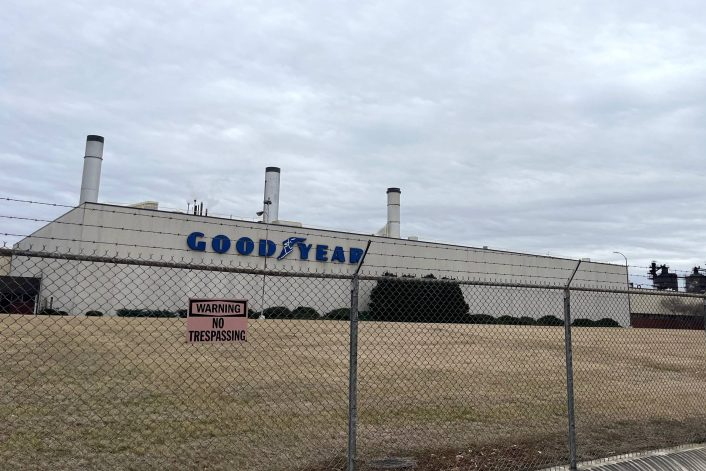
The rationale behind Explore was a serious one: The Roanoke Valley’s economy was changing, and not necessarily for the better. In 1982, the Norfolk & Western Railway — which had once defined the city — merged with the Southern Railway to form Norfolk Southern and the headquarters decamped east. The Roanoke Valley, like many other places across the country, was starting to feel the tectonic shifts that came with the growing loss of manufacturing jobs. The Federal Reserve‘s records on manufacturing jobs only go back to 1990 — five years after Explore was first proposed — but they capture the essence of the problem. At the beginning of 1990, there were more than 25,100 manufacturing jobs in the Roanoke Valley. Their numbers eventually fell to 15,177 by 2003. Today, they’re not much higher; 16,636.
Those who pushed Explore — former city manager Bern Ewert, some of the valley’s biggest name business leaders at the time — weren’t wrong. The Roanoke Valley did need a new economic engine; they just didn’t see that in time that would become health care. The only thing they were wrong about was their ability to raise the millions (at one point put at $150 million or more) to build the park. Disney World had the Walt Disney Company behind it. Colonial Williamsburg, a comparison they preferred, had the philanthropy of John D. Rockfeller. Explore had neither, and there wasn’t enough money in the Roanoke Valley to make the park happen. The park’s champions also counted on continued state support. When Baliles was in office, the money flowed — that first $6 million for the land, then at least another $5 million for planning. However, when Douglas Wilder became governor in 1990, and the economy went south as it sometimes does, the money stopped. And not just for Explore, but lots of other things.
The idea of a Disney-scale project died. The land, though, remained — about 1,100 acres of mostly woodlands along the Roanoke River where it tumbles through the Blue Ridge Mountains on its way toward Smith Mountain Lake. Ewert always said if nothing ever came of the project, at least this land would be protected, and he was right.
For much of the 1990s and early 2000s, it was unclear what would become of the land. At one point a Florida developer proposed a $200 million development on the site. Nothing ever came of that. Early on, a state authority with the cumbersome (and somewhat misleading) name of the Virginia Recreational Facilities Authority was created to own and govern the land. In 2013, the authority signed a 99-year lease to let Roanoke County take over the property. Since then, the county has worked to develop Explore into an “outdoor adventure” park, with camping, zip lines, biking and hiking trails. It’s also put about $8 million in the park, according to county Administrator Richard Caywood, for various types of infrastructure — water, sewer, parking.
Attendance, which was 35,000 in 2013, was just above 300,000 in 2024 — more than seven times what the natural history museum in Martinsville reported.

Explore, after all these years, is generating tourism dollars, just not the way it was intended. That 300,000 figure is something of a tipping point, Caywood says. “That’s where you’re getting to a critical mass for a lodge — you’re getting enough visitation that you can talk to people about much more substantial private investment.”
Except for one thing: He says the fact that the county doesn’t own the land is a complicating factor.
“It tends to scare away potential investors,” Caywood says. “It looks confusing.”
That’s why there are now bills moving through the General Assembly that would allow the authority to turn the land over to Roanoke County and, if it chose to do so, vote itself out of existence — SB 796 by state Sen. Chris Head, R-Botetourt County, and HB 2321 by Del. Will Davis, R-Franklin County.
Some of the land — 388 of the 1,100 acres — is in Bedford County. Bedford is OK with Roanoke County owning that land. The county borders don’t change; it’s just a case of Roanoke County owning land in another locality. The two counties have already worked out a deal to make sure that Bedford would get any revenue generated on the Bedford side of the line, and the Bedford supervisors in December passed a resolution to endorse these bills.
Head said that his bill “sailed out of” the Senate Finance Committee; I watched a video of the meeting and even Senate Finance chair Louise Lucas, D-Portsmouth, who can kill a measure with just a nod, was supportive. Barring something completely unexpected, these bills will pass unanimously and sometime later this year, Roanoke County will become the sole owner of Explore Park — 40 years after the park was first proposed as something else entirely.