
At Virginia Tech’s Reynolds Homestead in Patrick County, history is not confined to the 1843 brick house that still stands on the property once known as Rock Spring Plantation.
It’s also in the spring where generations drew water. In the cemetery where members of the enslaved community are buried. In the fields, forests and paths that still carry traces of many lives and many hands.
As Virginia and the nation prepare to mark the 250th anniversary of the Declaration of Independence, communities across the commonwealth are looking again at the places where America’s story unfolded — including quieter landscapes where its promises and contradictions were lived across generations.
At the Reynolds Homestead, that history comes into focus each year when descendants return for Juneteenth.
The day is often described as a celebration of freedom. It is also something else — an invitation to remember, to listen and to ask whose stories have been preserved, whose have been overlooked and how communities move forward together with a more honest understanding of the past.
In 1970, the Reynolds family gifted the property to Virginia Tech. Today, the Reynolds Homestead serves as a forest research center, historic site and educational and cultural center.
For generations, like many historic sites, much of the story told publicly centered on the people whose names appeared most prominently in written records. At Rock Spring, that often meant the Reynolds family, including tobacco magnate R.J. Reynolds, his siblings and their descendants.
But a place is never shaped by one family alone.
Over the past decade, tours have broadened to include more about the enslaved men, women and children whose labor shaped the land and its legacy. Now visitors hear stories about the R.J. Reynolds tobacco empire and Reynolds Wrap, but also the lives of people whose stories were long less visible in the public record — an enslaved woman whose descendants would help change civil rights history, enslaved men who served in the Civil War and families whose ties to the land continue across generations.
Honoring that deeper complexity is one reason descendant involvement matters so much. Through the Rock Spring Descendants Committee, oral histories, genealogy work, community conversations and collaborative planning are helping recover a story of resilience and relationships that might otherwise have been lost.
That work includes partnering with students and faculty from Virginia Tech’s Community Design Assistance Center to develop an interpretive trail between the Reynolds family cemetery and the cemetery where members of the enslaved community are buried, creating a place for learning and reflection.
A place to remember together
Each June 19, descendants return to the property not simply to reflect on the past, but to reconnect with one another and with a place deeply tied to their family histories. They tour the grounds their ancestors once walked. Some pause to drink from the spring that sustained generations before them. They visit the cemetery where enslaved community members are buried.
Among those historical reflections, there are also moments of joy.
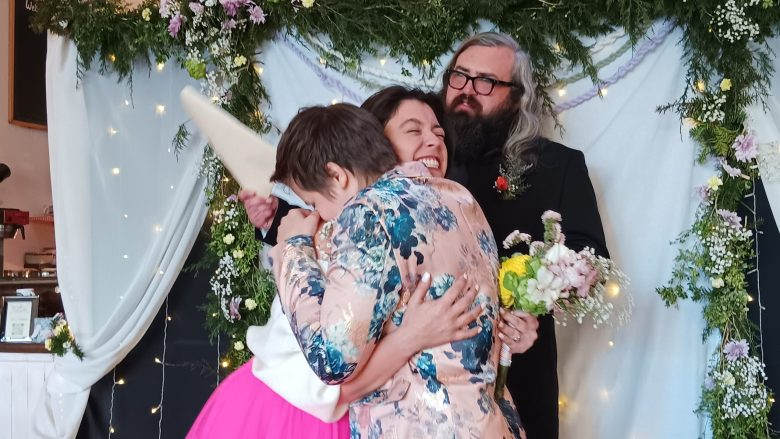
Families share meals and stories. Children play on the grounds and make corn-husk dolls. Relatives shake hands with cousins they never knew they had. Histories once scattered across counties and states begin reconnecting through conversation.
The Declaration of Independence set forth ideals that the country has spent nearly 250 years struggling to fulfill. That struggle is not separate from the stories of places such as Rock Spring Plantation. It is written into them.
Sites such as the Reynolds Homestead remind us that America’s early story was not lived only in capitols, courthouses, battlefields and taverns. It was also lived on plantations, in fields, along springs and in burial grounds, where people denied the promises of the Declaration carried their own freedom stories forward.
The partnership taking shape here reflects what that can look like in practice — an ongoing commitment to conversation, relationship-building and shared care for the historical record. It means making room for difficult histories while also recognizing resilience, achievement, connection and community.
At the Reynolds Homestead, that understanding continues to shape how history is being shared — not as a finished narrative belonging to the past, but as an ongoing conversation that invites more people to the table.
That invitation is open to the public. The Reynolds Homestead’s Juneteenth celebration is free and open to all, and visitors are welcome throughout the summer for tours of the historic home and walks through the grounds, interpretive signage and 1-mile LEAF Trail.
Juneteenth reminds us that freedom stories are community stories. They are Virginia stories. And they grow stronger when more voices are included in telling it.
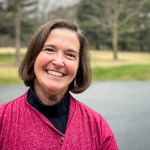
Julie Walters Steele is director of the Reynolds Homestead, a Virginia Tech community engagement center in Patrick County dedicated to lifelong education, cultural experiences and historical preservation.
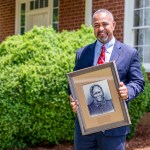
Kimble Reynolds is a Virginia Tech alumnus and community leader who traces his lineage to Anthony and Kitty Reynolds, two of the more than 100 people enslaved at the former Rock Spring Plantation.