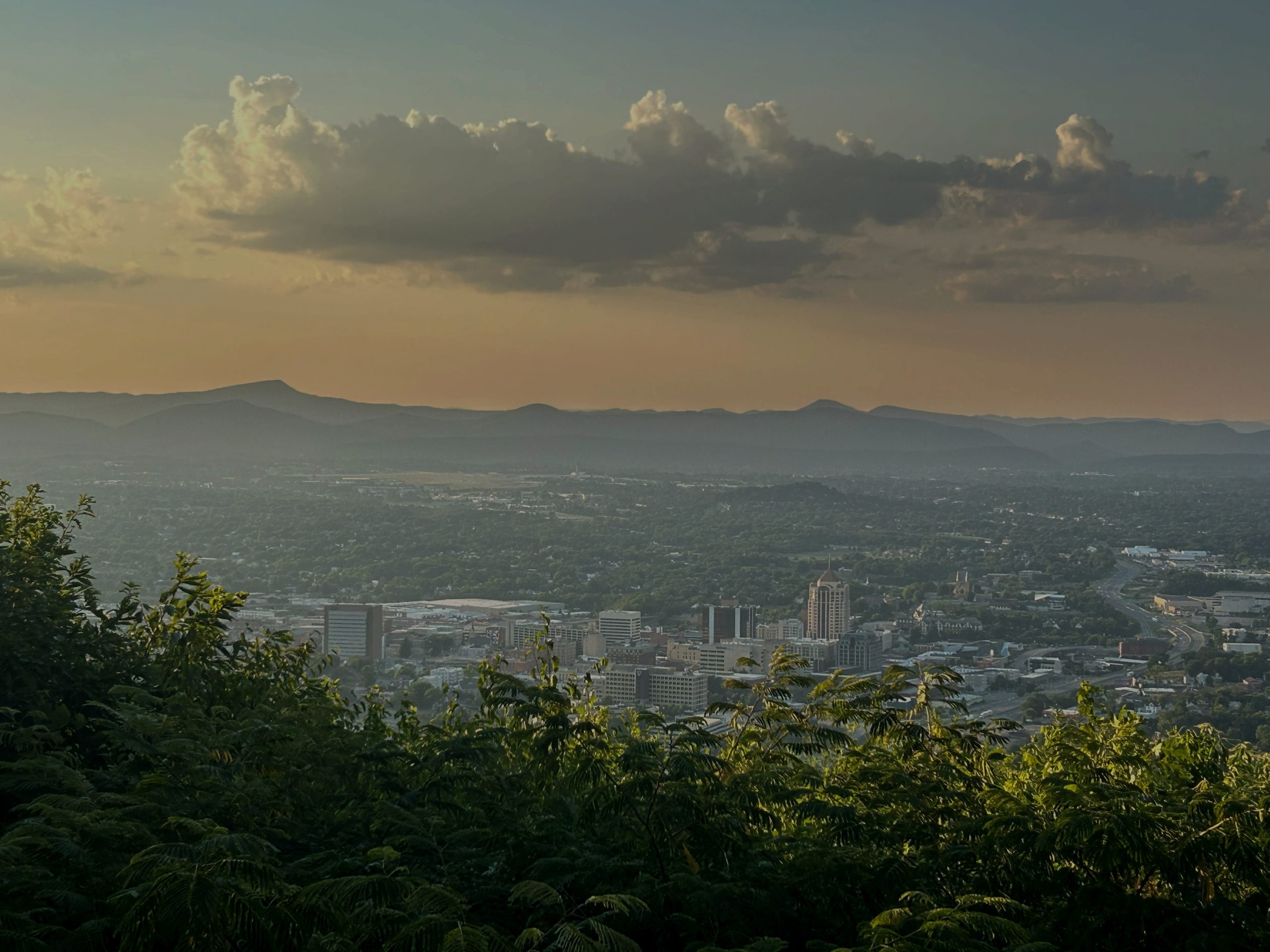


Last October, city officials stood outside the Berglund Center and announced they were looking into the prospect of creating an “entertainment district,” the centerpiece of which would be a casino to be located at the center.
The entertainment district in general, and the casino in particular, was born out of the city’s quest for more tax revenues and, according to City Manager Valmarie Turner, a review of “overall assets, including the Berglund Center.”
Those words, however cryptic, suggest the city may not be completely satisfied with the center’s performance. The overall number of events booked at the Berglund (which encompasses four different venues, with the largest being the 10,000-seat coliseum portion) has increased from 250 per year in 2019-2020 to 400 per year, city officials say, but there are fewer big shows than in the past.
That points to something important that we should keep in mind in any discussion of the Berglund Center, whether pro-casino or anti-casino: The entertainment world has changed dramatically since the center opened in 1971, it’s changed dramatically since the pandemic and we can’t have a rational conversation about the proposed “entertainment district” unless we all understand just how it’s changed.
* * *

In the late 1960s and early 1970s, American cities rushed to build indoor arenas, facilities that were deemed necessary for municipal economies — and prestige.
In 1971 alone, three Virginia cities opened arenas: Norfolk, Richmond and Roanoke.
Today, one of those facilities is no longer open. The Richmond Coliseum closed in 2019 and may now be torn down.
That’s not unusual. Other arenas that went up during that wave of arena construction have since come down. The Omni in Atlanta, which opened in 1972, was demolished in 1997. Market Square Arena in Indianapolis, which opened in 1972, was demolished in 2021. The McNichols Sports Arena in Denver, which opened in 1975, came down in 2000. All those have been replaced by newer venues — primarily to host professional sports teams — but the Richmond Coliseum has not been.
Roanoke is fortunate to have a minor league hockey team that fills 25 or so dates during the winter months.
A hockey team is something that Roanoke didn’t have when the Berglund opened in 1971 as the Roanoke Civic Center. In those days, the valley’s hockey team played in Salem. However, other sports at the center have slacked off over the years, through no fault of the center, but because of changes in the sports landscape. From 1977 to 1998, Virginia Tech and the University of Virginia always played an annual men’s basketball game in Roanoke. Nowadays, all their games are on campus, either in Blacksburg or Charlottesville — there’s no financial advantage for the teams to play at a neutral site.
In the center’s early days, it hosted some professional basketball games. The Virginia Squires of the American Basketball Association were a “regional” team, a since-abandoned concept that involved the team playing home dates at multiple cities across the state. Over time, the Squires gave up on Roanoke as a poor draw, and eventually both the team and the league folded. Even if the team had survived, its main venue, the Norfolk Scope, was considered too small for the Squires to be one of the teams that got absorbed into the National Basketball Association.
In 2001, the NBA launched its version of a minor league, what today is called the G League. The eight original teams were all in Southeastern cities intentionally distant from NBA franchises; the Roanoke Dazzle was one of them. The Dazzle lasted five years. The G League is still around, but none of those original cities are included. Today, almost all the G League teams are close to their NBA affiliates — some so close that they’re even in the same city, such as the Capital City Go-Go, who are related to the NBA’s Washington Wizards, or the Windy City Bulls, who are tied to the Chicago Bulls. That makes it easier to shuttle players back and forth and share administrative operations. The whole concept behind the league has changed in a way that locks out Roanoke.
As recently as 2010, there was an NBA preseason game in Roanoke — the Philadelphia 76ers vs. the New Jersey Nets. The NBA still plays some preseason games at neutral sites, but last year those sites included Australia, Abu Dhabi and China — part of the league’s goal to expand its market globally.
Whatever ideas existed in 1971 about the civic center being a major sports venue simply aren’t compatible with today’s sports economics.
The same is true of another big entertainment sector: music.
The construction of all those arenas across the United States in the late ’60s and early ’70s gave rise to a new genre of music called “arena rock” — radio-friendly music designed to appeal to a large enough audience to fill an arena when bands went on tour, which they did frequently then.
Here are some of the bands that played in the civic center in its early years, with tour info courtesy of websites such as Concert Archives and Setlist.

Black Sabbath: Ozzy Osborne’s band played 188 shows on its 1971 tour, cut back to 82 in 1972 (with Roanoke being one of those).
Emerson, Lake and Palmer: The prog-rock trio played 129 concerts in 1971, slowed down to 98 in 1972 and was positively lethargic in 1973 with a mere 64 concerts, including one in Roanoke.
Humble Pie: The Steve Marriott-led band, which for a time included a young Peter Frampton, played 89 shows in 1971, ramped up to 132 in 1972, then dropped down to a mere 82 in 1973, the year the band came to Roanoke.
Foghat: The band formed in 1971 and took a few years to work up to big tours. However, when it came to Roanoke in 1973 as an opening act for Humble Pie, that was one of 132 shows for the band.
Bands in those days toured constantly, which is likely one reason why so many members turned to drugs to ease the wear and tear of life on the road.
Those year-round tour schedules are not how the music business works these days. Of Billboard’s top-grossing tours in 2025, nobody in the top 10 played more than 64 shows (Shakira), and she was an exception. Stray Kids played just 31 shows, Beyonce 32, Kendrick Lamar 39.
Taylor Swift’s celebrated “Eras” tour had 60 shows in 2023, which seemed a big deal then but would have seemed pretty slow by early-’70s standards.
With bands touring as heavily as they did in those days, there were more opportunities for Roanoke to book acts that were big enough to justify the city’s biggest venue. Now those kinds of shows simply don’t exist like they used to.
Last year, the website Chartmetric published a study that showed “a steep decline” in touring acts. It set the bar low — “a touring act was defined as an artist that performed 10 or more concerts in a year” — and the website started its measurement in 2022, when COVID-era restrictions still depressed the industry. Chartmetric’s study of 4,000 artists (1,000 in each of four different career-stage categories) found that “Between these two years, the share of mid-level touring artists decreased from around 19% to 12%. Among superstars, touring numbers went down at an even higher rate, from 44% to 36%.”
There are multiple reasons cited for this: The music audiences today are more fragmented. Where once a city might have a single “rock” station, now music fans can listen to what seems like an infinite number of genres online. Some musicians simply don’t like to tour, and technology gives them an opportunity to get their music heard in other ways. “Ever since the advent of streaming, which gives easy access to the album, the function of touring has changed,” Chartmetric says. Once the purpose of a tour was to promote sales of physical albums; now, new music, in a digital format, might be a way to promote a tour — if the artist thinks he or she can actually make money on a tour.
A big-name act such as Taylor Swift can certainly cash in, but lesser names often find touring to be a money-losing proposition. You might think the ticket prices are too high, but so are the expenses. Backup musicians have to be paid, road crews have to be paid, hotels and travel must be paid for. If music stars can promote their music in other ways, they will.

Yet another factor: globalization. Digital Music News reports that more big acts are now adding dates in Asia to their tour schedule, which reduces the likelihood of playing a smaller American metro such as Roanoke. Why would Lady Gaga play to 10,500 paying customers in Roanoke when she can play to about 48,000 per night as she did last year during a four-night stand in Singapore? Communities often provide incentives to companies to locate because they provide jobs, but cities aren’t inclined to write $1 million checks to subsidize visiting rock stars. Or more. Lady Gaga’s four shows in Singapore grossed $40.8 million, or $10.2 million per night. Nobody likes to hear that their favorite artist is paying attention to the bottom line, but musicians aren’t charities. Many musicians are much like athletes; they have only a few years to cash in before their popularity (or athleticism) fades, so they’re going to try to make as much as they can, while they can.
The bands that do tour a lot tend to be ones that don’t fill arenas. Jason Isbell played 62 shows last year, according to Setlist. He’s coming to the Berglund Center in August but will play the 2,148-seat Performing Arts Center.
There are also more competing venues. ZZ Top, which has played the Berglund Center coliseum in years past, is playing Lynchburg in May in that city’s new amphitheater. Bristol is becoming a miniature music city with multiple venues, and that’s not even counting the casino. Speaking of which, Virginia now has casinos in Bristol, Danville, Norfolk and Portsmouth, with another on the way in Petersburg. All those also book bands and constitute competition.
All that’s a long way of saying the days of filling the Berglund Center coliseum with top bands are mostly over, and even the Performing Arts Center faces more competition than in the past. We’ll get some acts, but it’s not the early 1970s anymore. The lack of big shows or big games is not a failure of management or marketing; it’s simply a fundamental change in the entertainment market.
All that raises an uncomfortable question: Is the coliseum portion of the Berglund Center simply outdated? Not outdated in the sense of being older than most members of the city council, but outdated in the sense of being obsolete as a large-scale entertainment venue?
To some extent, we already have an Entertainment District, it’s just in the form of much smaller venues, such as 5 Points Music Sanctuary, The Spot on Kirk, the Exchange, or the Jefferson Center, all in Roanoke, or further down the road at The Harvester Performance Center in Rocky Mount. That’s where many of the bigger names play nowadays, although they’re not so big that they’d ever fill the coliseum at the Berglund Center — or even the Performing Arts Center at the Berglund. (Update: Some readers have pointed out that I have not listed their favorite venue, whatever it might be. That’s likely true. I haven’t attempted to list them all because there are a lot. Among the others: Dr Pepper Park, Martin’s, Sidewinders, occasional shows at the Grandin, and the list goes on . . . The sheer number underscores the point that Roanoke may already have an entertainment district, the city just hasn’t officially labeled it as such. There is a lot more music happening in and around the Star City today than when I covered music for The Roanoke Times back in the days of, well vinyl).
Would a casino attract more acts to Roanoke? Undoubtedly, casinos do book a lot of acts. (Let’s set aside the political obstacles in obtaining a casino for now.) However, those acts are not ones that fill 10,000 seats at a time. The performance venue at the Hard Rock casino in Bristol seats between 1,750 and 2,000, depending on the seating configuration. Caesars in Danville seats 2,500. Even the largest concert venue at a casino in Atlantic City seats between 5,500 and 7,000, still smaller than the Berglund coliseum. If a casino at the Berglund were wildly successful, it probably would generate more acts for the Performing Arts Center, but it seems unlikely to provide steady music business for the coliseum, unless we think Roanoke will become the next Atlantic City.
Would it be cool to have more entertainment options? Well, yeah. Is it something Roanoke should aim for? Sure. Would it be economically advantageous for Roanoke to attract more visitors? Of course. However, Roanoke should be realistic about what the entertainment marketplace looks like today. It does not look like the Berglund Center coliseum.
Feeling “Paranoid” about the latest political news? Thinking that following the campaigns in the special election feels like “30 Days In The Hole”? Don’t be a “Fool For the City.” I’ll have some very contemporary updates on early voting as well as some classic political news and insights in West of the Capital, our weekly political newsletter that comes out on Friday. Sign up here: