

Senate and House of Delegates conferees this week are deciding the fate of at least two data center bills — one of which would relegate them to industrial zones, and another that would require them to reveal their water use to the public.
These measures are among multiple data center bills the General Assembly has considered as it moves toward its scheduled Saturday adjournment. Disagreement in budget negotiations over ending a tax exemption for data centers threatens to spill over into a special session, while bills to study energy demand and improve generator emissions passed both bodies and await the governor’s pen.
The siting bill is SB 94, which Sen. Danica Roem, D-Prince William County, sponsored. It’s similar to HB 153, from Del. Josh Thomas, D-Prince William County. Both would require data center developers — and others seeking to use 100 megawatts of electricity or more — to examine the effect their noise would have on homes and schools within 500 feet of property boundaries. They would also have to assess effects on ground and surface water, agricultural resources, parks, historic sites and forestland on the sites or adjoining lands.
The difference is that Roem’s bill includes a clause requiring industrial zone siting. The House’s version does not. Unable to settle the matter, they’ve sent it to a conference committee that includes Roem, Thomas and Sen. Bill Stanley, R-Franklin County, who voted against Roem’s bill and said he doesn’t support the siting clause.
Thomas, through his office, declined to comment until after the session.
Thomas and former Sen. Adam Ebbin, D-Alexandria, got a site assessment bill through last year, minus location restrictions, but then-Gov. Glenn Youngkin, who had professed a preference for local control of data center issues, vetoed it.

“They really worked hard together and then, what was their reward for a good faith effort? They got screwed in the end by the governor being sympathetic to the industry,” Roem said.
She added: “I’m going to try to get everything I can possibly get right now to stand up against data center sprawl in our area and to stop treating a multitrillion-dollar industry like they can just push over the General Assembly and get whatever they want whenever they want to get it.”
Prince William County, home base for Roem and Thomas, has at least 44 data centers, with more than a dozen on the way, according to county documents and published media reports. They are the subject of multiple ongoing lawsuits over location, including one in which a development is planned adjacent to Manassas Battlefield National Park.
Gov. Abigail Spanberger holds the veto pen now. She told Cardinal News during the gubernatorial campaign last year that the commonwealth “needs a statewide strategy on data centers — not a statewide mandate, but a strategy that helps localities across every corner of Virginia make informed decisions about their best path forward and know what options are available to them.”
While she did not elaborate, she said in a separate interview that the state could provide localities with a “best practices” list of what to ask about as they negotiate with data centers.
To settle the siting issues, conferees Roem, Sen. Kannan Srinivasan, D-Loudoun County, and Stanley have joined House counterparts Thomas, Del. Kelly Convirs‑Fowler, D-Virginia Beach, and Del. Scott Wyatt, R-Hanover County.
Publicizing water use
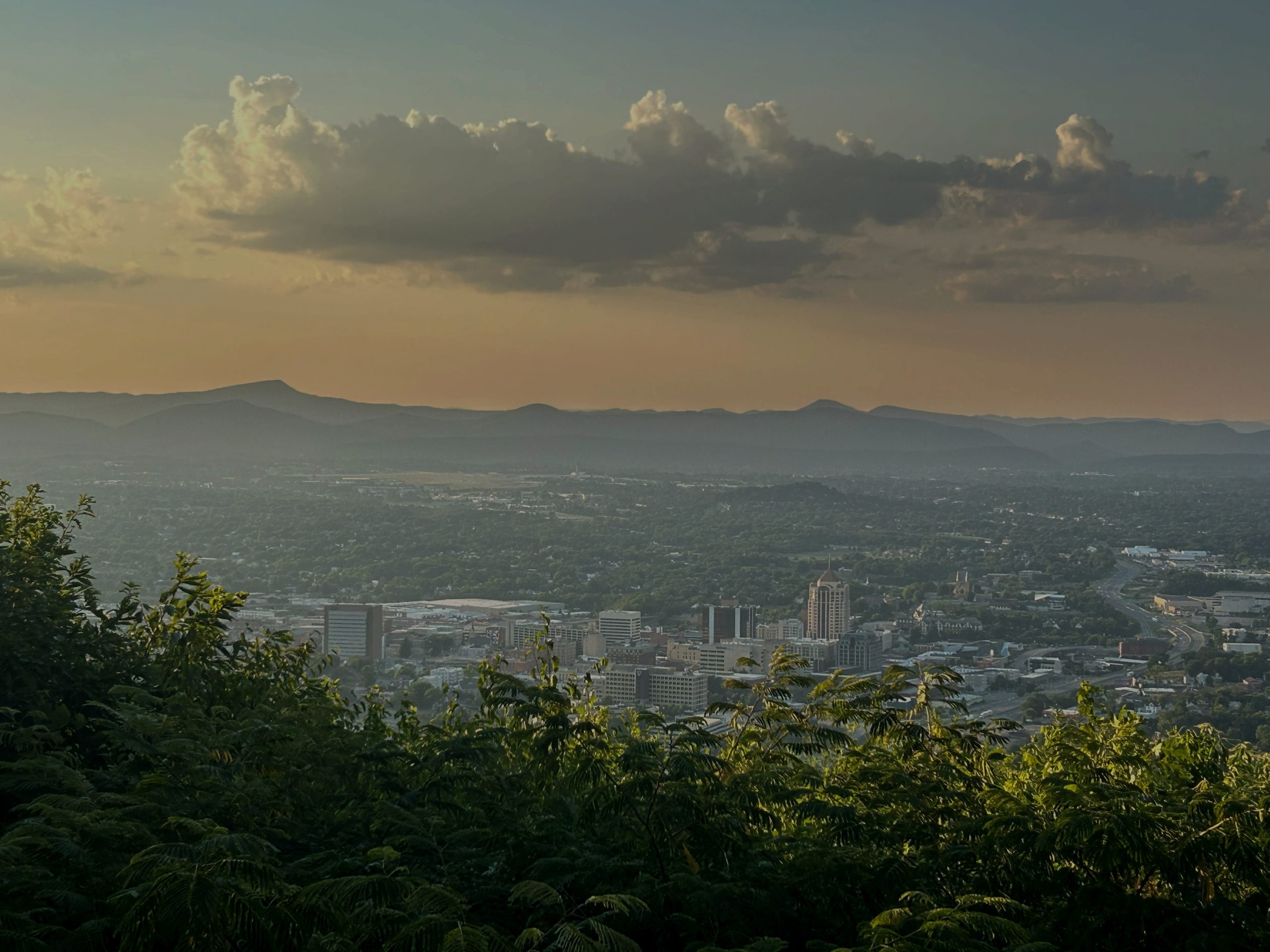
In Southwest and Southside Virginia, the few data center projects announced to date are planned for industrial parks, but public reaction has formed against some of them, with a dispute in Botetourt County centering partly on the estimated water use of a proposed Google project.
Srinivasan carried SB 553, which would require authorities that provide water to data centers to regularly disclose the total volume withdrawn to the State Water Control Board. On the House side, Del. Liz Guzman, D-Prince William County, sponsored a similar measure, HB 496.
Both would require authorities that provide water to data centers to publicly disclose water usage. But the differences between them are sending them to conferees. While the Senate bill required total volume submitted to the State Water Control Board, the House bill would have consumption estimates submitted for rezoning and special use permit requests at individual localities.
Sens. Dave Marsden, D-Fairfax County, and Richard Stuart, R-Westmoreland County, will join Srinivasan in conference. Guzman, Del. Alphonso Lopez, D-Arlington County, and Del. Will Morefield, R-Tazewell County, are the House conferees.

Srinivasan said he prefers exact numbers from a single source for public information.
“They both are transparency bills,” he said. “They both are good bills. They both will be useful. We just have to come to an agreement which is a better path forward. They both are slightly different.”
Transparency can cut both ways, Srinivasan said. He represents “Data Center Alley,” home of more data centers than any location on the planet. He has seen during many data center visits innovations that would interest the public.
“They’re using closed loop systems. They’re using air-based cooling,” Srinivasan said. “Older data centers though, may still be using a lot of water, but the newer ones, they’ve done a ton of innovation, right?
“So one of the things from my perspective is this will benefit everybody, including the industry. This transparency will also showcase what those innovations have been.”
A roundup of data center bills
At least eight other data center-related bills have gone to Spanberger’s desk during this General Assembly session.
Roem’s SB 43 would direct the Department of Energy to study and make recommendations on utilities’ demand-response programs, with a report due by Nov. 1.
Del. John McAuliff, D-Loudoun County, introduced HB 507, which would prohibit the Department of Environmental Quality from approving any data center application from July 1 onward unless its generator emission limits are equal to or less than the emissions achieved by a tier 4 equivalent generator.
HB 323, from Del. Rip Sullivan, D-Fairfax County, would commission a Department of Energy study on how to use waste heat from data centers, with a Sept. 1 deadline to give the General Assembly a report on findings and recommendations, plus a strategic plan.
Sullivan and other delegates carried HB 897, a bill to require the facilities to restrict carbon dioxide emissions and move toward clean energy resources in order to qualify for Virginia’s sales and use tax exemption for data centers’ equipment and software. It passed the House but died in the Senate.
Two bills addressing generator use also died. The Senate continued until 2027 Guzman’s HB 1502, which would have directed the DEQ to conduct a one-year study of standby generators and explore ways to address their pollution. The House continued Roem’s SB 336, which called for the State Corporation Commission to study the potential impact if data centers were required to use cleaner-burning generators.
The House tabled another Roem bill, SB 334, to require a public hearing when any locality seeks a land transaction with a data center or other facility using more than 69 kilovolts of power. The Senate continued HB 591, by Del. Shelly Simonds, D-Newport News, intended to facilitate information sharing on energy use, interconnection timelines and renewable energy resources among data centers, state agencies and regional grid operators.