Want more political news and analysis? Sign up for our weekly political newsletter, West of the Capital, which goes out Friday afternoons:
Last Saturday, when it became clear that the weekend rain had brought flooding to Southwest Virginia, the first thing I did was contact some legislators from that part of the state.
I was not at all surprised when state Sen. Travis Hackworth, R-Tazewell County, texted me nine photos of flooding in his district — and said he was on his way to the local command center.

After Hurricane Helene last fall, Hackworth was something of an unofficial relief coordinator for his sprawling district, which takes in all or part of seven counties and one city. He was inspecting the damage in a state police helicopter, he was working with churches as far away as Ohio to bring in supplies.
Last weekend, state Sen. Todd Pillion, R-Washington County, was in Richmond — he’s one of the elite group of budget negotiators and had to spend the weekend in the capital to work on the state’s spending plan. In between negotiations, though, he was in touch with local officials about flooding and delivered a more comprehensive report on the damages than we were able to get anyplace else.

Again, I was not surprised. During Helene, he went to the town of Damascus, which suffered some of the worst flooding, and delivered regular video reports on social media in which he advised his constituents what to do.
All that came to mind this week with the news that Del. Danny Marshall, R-Danville, won’t be seeking reelection due to health issues. “Let’s not call it a retirement,” he told Cardinal’s Elizabeth Beyer. He’s facing an undisclosed surgery but after that hopes “to be 100%,” just active in other ways.
What particularly struck me was the nature of the tributes that came in from fellow legislators. They did not cite legislation he had authored or speeches he had made — but jobs that he had helped bring to his Southside district.
From Del. Eric Phillips, R-Henry County, who represents an adjoining district: “Danny’s impact on our region is immeasurable, and the effects of his work will be felt for generations. From the [Institute for Advanced Learning and Research] in Danville to the SOVA Berry Hill Megasite and numerous other projects — many of which are still ongoing, like the White Mill project, where he secured funding — Danny has made a lasting difference.”
Danville City Council member Lee Vogler said the same: “Danny Marshall’s impact on our region will be felt for decades. His fingerprints are all over the comeback we’re experiencing.”

The connection between these disparate things — storm relief in Southwest Virginia and economic development in Southside — is this: Rural residents expect more out of their state legislators than their suburban counterparts.
That’s not to diminish the work that suburban legislators do, but rather simply to acknowledge the structural differences between their districts. Legislators from rural areas and smaller communities, by definition, represent communities that are almost always under-resourced. In some counties, the county administrator doubles as the economic development director, and may triple and quadruple as other things that larger communities have entire staffs for. That means rural communities often look to their state legislators to do things that their suburban counterparts don’t necessarily have to do — whether it’s being out in the middle of a storm or pursuing economic development deals.
Legislators come in all sorts of different styles.
Some love to light up social media. State Sen. Louise Lucas, D-Portsmouth, is famous for her social media pronouncements. I can’t find any evidence that Marshall even has a Twitter/X account.
Marshall comes from a grand tradition of legislators from Southwest and Southside who don’t generally make a lot of news but behind the scenes are working year-round to try to bring jobs to their districts. Not every legislator fits that mold, but enough do that it stands out: It’s why Del. Wren Williams, R-Patrick County, has been involved in trying to get the shuttered hospital in his home county reopened and why Del. Will Morefield, R-Tazewell County, was a driver behind the salmon farm under construction on the Russell County-Tazewell County line. It’s why some years ago a group of Southwest Virginia legislators — Pillion; Dels. Terry Kilgore, R-Scott County, and Israel O’Quinn, R-Washington County; and the late state Sen. Ben Chafin — were instrumental in creating an entirely new economic development entity for the region, InvestSWVA. It’s why Del. Terry Austin, R-Botetourt County, has been so active in pushing programs to expand the pipeline of talent for health care jobs in the Roanoke Valley. I’ve probably left out some other legislators, but you get the idea. Maybe legislators in more urban areas do these kinds of things, too, but that’s not what they’re famous for.
Here’s perhaps the key passage from our story about Marshall choosing not to run again:
He noted that when he was elected in the early 2000s, the unemployment rate in Danville was double what the state’s rate was and the prevailing wage for workers was about half of what it was across Virginia.
“The whole goal was trying to get the unemployment rate down and get the prevailing wage up,” he said.
When Marshall was elected in November 2001, the unemployment rate in Danville was 7.6% — and that was actually on the low side. A decade before, in April 1991, it had been as high as 16.2%. Marshall’s point is on point, though. For decades now, Danville’s unemployment rate has been much, much higher than the state as a whole. Sometimes it wasn’t just double the state average, it was more than double. Today Danville’s unemployment rate is down to 4.0%. That’s still a little higher than the state average of 3.0%, but the gap is down to just a statistical wiggle.
The median household income in Danville has nearly doubled, although it still remains about half that of the state figure, but keep in mind that Virginia figures are skewed by the affluence of Northern Virginia.
Here’s another measure: Danville’s population peaked in 1990, and the city has been losing population ever since — until now. The most recent population estimates from the Weldon Cooper Center for Public Service show that Danville is now gaining population again. It’s doing so only because far more people are moving into the city than moving out. Like many other communities with aging populations, deaths far outnumber births — but moving vans bringing in new people far outnumber the hearses. This is a remarkable turnaround for a city that many had given up for dead a quarter-century ago.

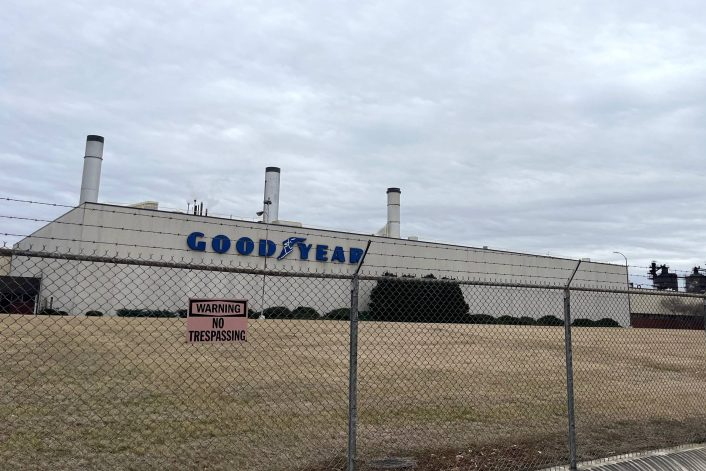
Danville is a showcase example of a city that has reinvented itself after an economic trauma — in Danville’s case, the decline of tobacco and the collapse of textiles. Don’t be misled by the glitz of a casino; Danville’s reinvention has come through advanced manufacturing. If the Microporous battery plant at the Southern Virginia Megasite in Pittsylvania County comes to pass, Danville and that whole part of the state is prime for even more economic transition, this time on the job-gaining part of the ledger. (I say “if” because part of the Microporous deal was based on federal funding, and it’s unclear what the status of that is with everything that President Donald Trump is cutting.)
Marshall may not have been a household name in other parts of Virginia, but in Danville and vicinity, he has loomed large — and it sounds likely that he still will, even if come next year he no longer has “Delegate” in front of his name.
Just as Southside has been in a decades-long economic transition, it’s also going through a political transition. Every community does so at some point, and now it’s Southside’s unfortunate turn to see senior legislators exit. State Sen. Frank Ruff, R-Mecklenburg County, had been set to be the senior Republican member on the budget-writing Senate Finance Committee. Now he’s gone, having succumbed to cancer. State Sen. Steve Newman and Del. Kathy Byron, both R-Bedford County and both senior legislators, retired. Marshall, a member of the House budget-writing equivalent, the House Appropriations Committee, is now leaving. In late 2023, Del. Les Adams, R-Pittsylvania County, left to take a judgeship. Del. Matt Fariss, R-Campbell County, fell victim to personal problems and the law. And last year, state Sen. John McGuire, R-Goochland County, was elected to Congress. That’s a lot of turnover in a short time.
The result: From the Blue Ridge Mountains to the western suburbs of Richmond, from the James River south to the North Carolina line, there are now five legislators in their first term: Sens. Luther Ciphers of Prince Edward County and Tammy Mulchi of Mecklenburg. Delegates Tim Griffin of Bedford County, Eric Phillips of Henry County and Eric Zehr of Campbell County. A sixth, Tom Garrett of Louisa County, is in his first term as well, but he previously served in the state Senate, so I’m not counting him. All these are Republicans, so for now have the disadvantage of being both low in seniority and in the minority party. We’ll see if this fall’s elections change that. We know one thing that will happen in November, though: Southside will elect at least one more freshman, this time to follow Marshall. The “giant sucking sound” that region has heard hasn’t been jobs going overseas (that happened a while back) but the loss of seniority in Richmond.
In praising Marshall, Kilgore said: “Danny really steps up, he knows the economic development game, he knows what we need in rural Virginia — we have to work twice as hard to recruit businesses.”
As voters in Danville, and parts of Pittsylvania and Halifax County, set about the business of finding a successor to Marshall, they should think about not just who they want, but what kind of legislator they want.
Join us for a conversation with top legislators

Join us Thursday, Feb. 27, at Fitzpatrick Hall in Roanoke for the second annual Cardinal Way: Civility Rules luncheon with the top leaders of the Virginia General Assembly.
Hear from top Republican and Democratic House and Senate leaders as they discuss the issues on which they found consensus and those in which they remain far apart. They’ll also leave time to answer your questions.
Cardinal Way: Civility Rules is a project partially funded by a civil discourse grant from the American Press Institute. This event is also sponsored by Gentry Locke Consulting. Tickets are available here.