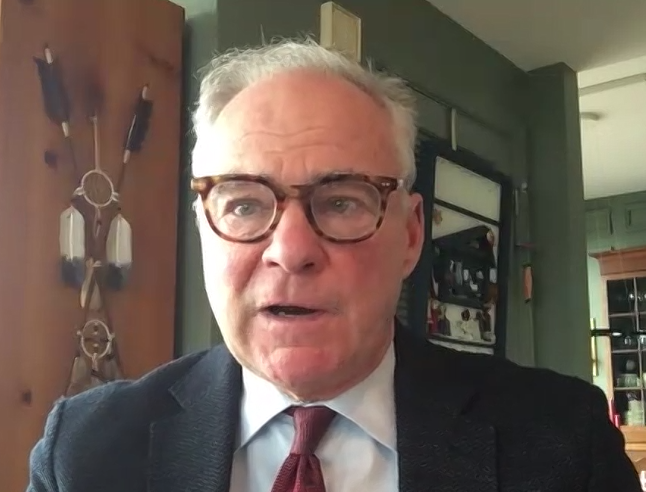


More than a dozen Western Virginia residents zeroed in on policies they would like to see changed in Gov. Glenn Youngkin’s budget amendment proposal during a public hearing on Friday.
Their ideas ranged from access to disability services, to increased funding for K-12 education and child care, to freshwater testing, to affordable housing and a request regarding emergency medical services.
The hearing, moderated by Sen. Creigh Deeds, D-Charlottesville, was part of a statewide effort to hear what Virginians think about the governor’s budget proposal. The joint Senate and House of Delegates finance and appropriation committees split the effort up into separate hearings hosted by lawmakers who sit on the committees from each of the commonwealth’s four regions: Western Virginia, Northern Virginia, Hampton Roads and Central Virginia. Deeds; Del. Sam Rasoul, D-Roanoke; Del. Will Morefield, R-Tazewell County; Del. Terry Austin, R-Botetourt County; Del. Ellen Campbell, R-Rockbridge County; Sen. Mark Obenshain, R-Harrisonburg; and Sen. Todd Pillion, R-Washington County, also attended the hearing.
“Today is your opportunity to talk, and our job as legislators is to listen,” Deeds said at the start of the hearing.
The series of hearings, required by law, take place each year after the governor unveils their budget proposal. The hearings are designed to give the General Assembly an opportunity to hear their constituents’ priorities in a public forum. Each speaker was given about three minutes to address the lawmakers during the hourlong virtual hearing.
Funding for disability services, schools among top requests
About 20 residents of Western Virginia registered to speak during the hearing. Not all ended up addressing the lawmakers.
Most of the speakers identified themselves as residents or representatives of organizations based in Southwest and Southside Virginia. Their top priorities focused on increased access to disability services for people of all ages, funding to support career and technical education in schools, and a request to maintain language in existing legislation that the governor’s proposal would strike that would affect emergency medical service workers.
Phillip Norman, western regional manager for Child Care Aware of Virginia, an organization that helps coordinate child care between providers and families, noted that it is difficult for providers to attract and retain staff. That issue has led to long waitlists for families seeking care for their children. He noted that Virginia’s child care subsidy program has had a waitlist as well, since July, when state funding ran out.
“Child care is expensive,” he said. “Parents need access to child care so they can work; employers depend on working parents.”
Norman’s organization recommended that the General Assembly invest in child care subsidies for working families and a child care subsidy as a workforce benefit.
Ayah Ibrahim from Botetourt County, a mother and a caregiver of a 4-year-old child with a disability, asked the lawmakers to support a study that would provide core services to people on the developmental disabilities waiver waiting list. Those waivers help eligible people with a developmental disability to receive services and support in their community, according to the Virginia Department of Behavioral Health and Developmental Services.
“Like many families on a DD waiver waitlist, we faced delays and frustration in accessing essential services,” she said.
Ibrahim, who is also a board member of the Arc of Virginia, which advocates for people with disabilities, also asked that the study include a look at respite care for caregivers.
Linda Lawrence from Roanoke, who said her grandson received a developmental disability waiver after 18 years on the waiting list, asked the lawmakers to address a shortage of service providers. She said that those providers need additional funding and training to support people with developmental disabilities and that some of her grandson’s providers are not Medicaid-approved, which has led them to pay expensive bills for service out of pocket.
Sierra Cox from Galax sought support for Brain Injury Solutions, an organization that works with people who experienced traumatic brain injuries. Cox said she was compelled to speak on behalf of her daughter, who survived a traumatic brain injury at 2 months old. Cox asked that the lawmakers allocate funds to support Brain Injury Solutions, where her daughter received services and support.
Keith Perrigan, superintendent of schools in Washington County and president of the Virginia Association of School Superintendents, spoke in support of lifting the cap on funding for the number of school support positions from 24 staff members per 1,000 students to 27 per 1,000 students. School support positions include anything from administrative office workers to school nurses and technology support staff. Perrigan also said additional dollars are needed to support the expansion of career and technical education in schools.
John Weatherspoon, CEO of Wall Residences based in Floyd, sought support for nursing and labor services. Wall Residences provides residential services for adults with developmental disabilities.