


Shortly after the election, Del. Sam Rasoul, D-Roanoke, posted this observation on his social media accounts: “We are now the party of the wealthy, as the majority of voting Americans making less than $100k voted Republican.”
A chart accompanying his post, drawn from exit polls, was the precise breakdown: The nation’s poorest voters backed Republicans; the most affluent ones voted Democratic.

This is a complete reversal of the historic stereotypes that cast Republicans as the party of the rich and Democrats as the party of working people.
That configuration was true once, even as recently as 2012. That year, Barack Obama won the votes of those making less than $50,000 (60%) while Mitt Romney won the votes of those making more than $100,000 (54%).
What’s happened in between to flip those political poles? Donald Trump.
There are surely other forces at play, but Trump, the Republican presidential candidate now for three elections in a row, is the one who has personified and accelerated a realignment that was already underway.
We see this in Virginia. The state’s most affluent localities — in Northern Virginia — are now the Democratic base. Some of the state’s poorest localities — in Southwest Virginia — now vote 80% or more Republican.


How Virginia localities have realigned from 1976-2024.
Income is the easy metric to grab hold of here but may not be the best one. Pollsters will tell you the better indicator of how someone will vote is education. In 2012, Obama won (barely) those with a high school education but lost (barely) college graduates. Now there’s a more pronounced education gap: 55% of those with a college degree voted for Kamala Harris, while 56% of those without a college degree voted for Trump, according to this year’s exit polls.
What we’re really seeing here is something Americans don’t like to talk about much: class.
Republicans, once the party of the upper class, are now the party of the working class. Country club Republicans have been supplanted by Walmart Republicans, as many others besides me have observed. Nationally, this explains why Rust Belt states that once were Democratic strongholds are going red.
This year’s election loss has now set off Democratic wrangling over why their party has lost support among working-class voters, setting off the predictable tug-of-water between progressives (who think the party’s platform wasn’t far enough left) and centrists (who think it was too far to the left).
Democrats will now likely commission lots of polls and focus groups to help them figure out how they’ve seemingly lost touch with a constituency that was once at their core.
I will save them the trouble: Democrats simply don’t listen to enough country music.
Some of you are laughing right now, but don’t — I mean this in all seriousness.
The most searing social commentary in the music world is taking place in country music, and Democrats literally aren’t listening to it.
A study by two Ohio Wesleyan University scholars published earlier this year by Science Direct explored the relationship between favorite music genres and politics. The summary published in the journal is, as the publication title suggests, quite direct indeed: “Democrats and liberals are repelled by country music.”
This may be generally true but isn’t entirely true: A YouGov poll last year found that 7% of Democrats say country music is their favorite genre. However, a full 33% either dislike it or actively hate it.
The problem for Democrats is that country music is popular with the voters they’ve lost. That YouGov poll found that country music was most popular with those making less than $50,000 a year — the voters who once voted Democratic but now are voting Republican. Among independents, it’s the second-favorite musical genre, behind classic rock. With Democrats, it’s fifth and, at 7%, not a particularly strong fifth, either.
Here’s what Democrats have missed by not listening to country music: an unrelenting sense that the economy isn’t working for people.
To be fair, that’s always been the worldview of country music. Back in 1977, Merle Haggard had a hit with “A Working Man Can’t Get Nowhere Today.”
My sense — and it’s just a sense, I have no data to support this — is that over the years country music has become sharper on this point. I remember in 2016, Democrats were shocked to see Rust Belt states go for Trump. They clearly hadn’t listened to John Rich’s “Shuttin’ Detroit Down” or Hank Williams Jr.’s “Red, White and Pink Slip Blues.” More recently maybe they should have listened more closely to what the Virginia-based Oliver Anthony was saying in his viral hit “Rich Men North of Richmond” and not gotten so hung up on the part about the fudge rounds.
For those not familiar with these songs, here’s your opportunity to play catch-up.

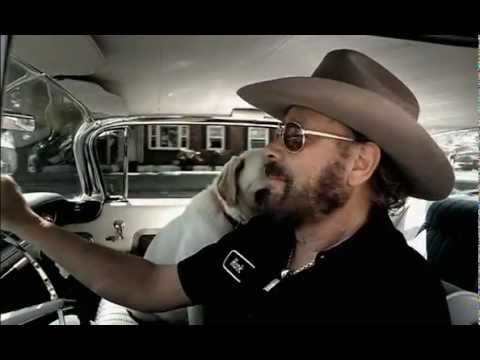

None of these songs are overtly political, in the sense that they say “Go vote Republican.” They do, however, express a deep disdain for elites of all sorts. Rasoul’s post strikes at the heart of the matter: Democrats today are seen to represent the elites.
They will dispute that — what about the Koch Brothers? — but we’re not talking here about policy, we’re talking about perception. Republicans nominated a ticket with two Ivy League graduates (the University of Pennsylvania for Trump; Yale for JD Vance). Democrats nominated a ticket of non-Ivy Leaguers (Harris, a Howard University graduate; Tim Walz, from little-known Chadron State College), but that’s not how the two parties were perceived.
We’re living in an age of “vibes,” and Democrats just don’t give off working-class vibes. They may think whatever working-class vibes Republicans give off is posturing, but that’s irrelevant; you can’t control what the other party does, only what you do. In Virginia terms, Democrats come across feeling more like Great Falls than Big Stone Gap, a place they used to win but no longer do. Or, if to continue the music theme, they feel more nightclub than honky-tonk.
I go back to the manufacturing plans both candidates produced during the campaign. Trump embraced tariffs — which may be economically wrong-headed but are clearly understandable and convey a sense that he’s going to do something to try to restore manufacturing jobs even if he really can’t. (More manufacturing jobs were created in the U.S. under Biden than under Trump 1.0, but the rate didn’t grow particularly fast under either one.) Harris’ manufacturing plan, though, didn’t talk much about actual manufacturing at all; instead, it talked about artificial intelligence and data centers. Really? When I go down to the Quick-Ette convenience store in Fincastle, I sure don’t hear people sitting around saying, “Gosh, this country’s going to hell, if only we had some AI and data centers.” They’re not sitting and talking about tariffs, either, but for the past four years, I’ve heard constant complaints about inflation, from the high prices at the gas pumps outside to the high prices at the grocery store down the road. In one poll after another this fall, Democrats consistently didn’t rank the economy as a particularly big concern. Democrats should have spent more time at the Quick-Ette. They should have spent more time listening to country music because country music is constantly talking about how hard it is to get ahead these days. The election results don’t come as a surprise to anyone who gets their social cues from Nashville and not Hollywood.
If I were to recommend just one artist for Democrats to listen to, it would be Cody Jinks. You can listen to “The Working Man” off his new album, which gives a good profile of the type of voter that Democrats are losing:
However, if you can only stomach one country song, take a listen to “What Else Is New,” particularly for these lines:
Yeah, the cost of livin’ goes up and the pay goes down
I don’t care what’s right or left, y’all
I’m just out here with the rest
In the middle class, that still means broke to me

That would be a pretty good way to end this column, except for this. Earlier this year, Jinks was on “Fox and Friends.” He didn’t talk about politics. He just pushed his new album and played a song. Still, he was there. When Rachel Maddow has Cody Jinks on her show, then I’ll know Democrats are serious about trying to connect with working-class voters.
What happens next in Virginia politics?
I’ll look at some of the possibilities in this week’s edition of West of the Capital, our weekly political newsletter that goes out on Friday afternoons. You can sign up for that or any of our free newsletters below: