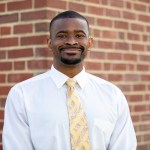

On Tuesday, Jan. 23, I had the opportunity to testify before the Senate Finance Committee at the General Assembly in support of legislation that will potentially help Prince Edward County students and our schools. SB 146 would allow the Prince Edward County Board of Supervisors to authorize a ballot referendum and let our Prince Edward County voters decide if we want to accept a 1% sales tax increase solely to fund the construction and/or renovation of schools. If passed, Prince Edward would become the tenth locality afforded this option by the General Assembly. The other localities include the counties of Charlotte, Gloucester, Halifax, Henry, Mecklenburg, Northampton, Patrick, Pittsylvania and the city of Danville.
As I stood to speak to the committee, I could not help but think of the sad irony that in 2024, I am still advocating for equity in Prince Edward Schools just as my family and many others did over 70 years ago in the 1950s and 1960s. My family history is very much intertwined with Prince Edward County Public Schools.
My great-grandfather, John Townsend, was a plaintiff in the Davis v. County School Board of Prince Edward County case that was included in Brown v. Board of Education, the landmark U.S. Supreme Court decision that in 1954 established racial segregation in public schools is unconstitutional.
My great-aunts Mildred and Arlene participated in the 1951 student walkout alongside Barbara Johns. My father is part of what is known as the “lockout generation” in Prince Edward County. He missed several years of education when Prince Edward County closed its schools from 1959 to 1964 instead of desegregating them. He turned 11 years old in the first grade.
I am a native of Prince Edward County and grew up attending our schools. I love this community and have chosen to raise my own family here. My oldest child attends the elementary school, and I have two younger children who will one day attend our schools. I do the work I do for them and for the future students who will attend our schools.
I ran for the school board in its first-ever election in 2017, and was proud to be elected. Serving in this role was especially meaningful considering the same body denied my father, his siblings, and many others access to their education. I was elected again in 2023 and am honored to serve our community and advocate for our children.
Today, one of the biggest challenges the school board grapples with is how to address deficiencies in our school facilities. The most serious deficiency is the leaking roofs and associated mold at Prince Edward County Elementary School. First built in 1969, this school has been in continuous use since and houses over 800 students and 60 staff members and volunteers. It serves as the location for parent nights, celebrations, dances, professional development, a parent resource center, and many other activities that bring our community together.
Although roof areas have been patched and repaired, the roofing structures continue to deteriorate, causing leaks, damaged tiles and warped walls throughout the building. Without significant renovations or construction of a replacement building, our elementary school will no longer meet the public health and safety needs of our children and staff. The estimated cost to renovate Prince Edward Elementary is around $43 million.
Like many other smaller, rural communities, our board of supervisors grapples with how to generate that kind of revenue. One option is to raise our real estate tax rate 20%-25%, but that is not an option for a locality with a poverty rate of 23.6% and would be too big of an ask for our citizens. Instead, the voters could decide whether they would accept a 1% increase in sales tax to fund our schools, just as other localities in our region have done.
If passed, SB 146, sponsored by newly elected Republican Sen. Tammy Brankley Mulchi, and HB 60, sponsored by Republican Del. Tommy Wright, will allow Prince Edward to put this question before our voters through a referendum. Ultimately, the voters of Prince Edward County will make the decision on whether the 1% sales tax is the correct funding path for our community. All citizens should be concerned about the quality of the public schools, because strong schools create a strong community and help sustain economic vitality. Good schools mean a great community.
As I sat down and watched SB146 pass the Senate Finance Committee, I thought of my great-grandfather and my great-aunts fighting for desegregated schools. I thought of my own father who was blocked for years from going to school over the issue of equity. While the fight may look different today, the goal is still the same. I am proud to carry on my family’s legacy and work with our school board and board of supervisors to ensure all of our students receive the education they deserve.